
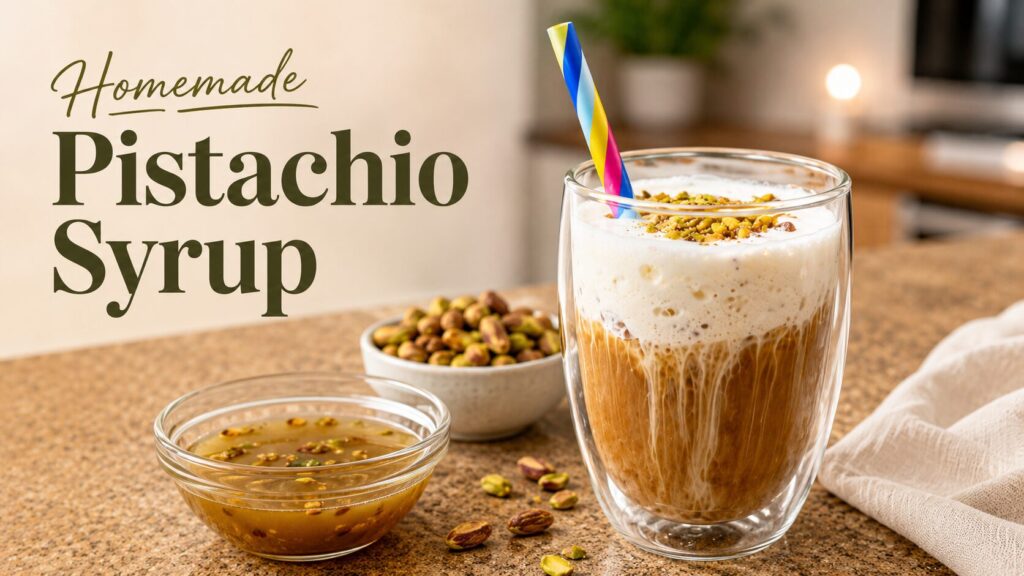
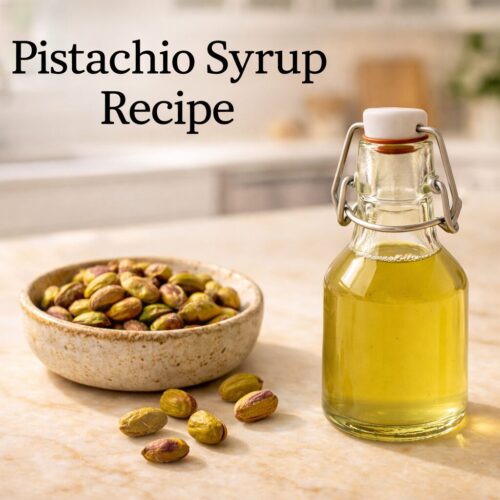
This pistachio syrup tastes like actual pistachios — not the candy-sweet flavoring in a Torani bottle. Real pistachios, sugar, water, and a little vanilla. That's the whole list.
It takes about 30 minutes and runs under $3 a batch. Below is exactly how I make mine, step by step — including why it comes out cloudy instead of bright green.
Pistachio syrup is just simple syrup steeped with crushed pistachios until it picks up the nut's fat, flavor, and color. You get a soft green-gold liquid with a roasted, buttery sweetness.
Pistachio's been in Mediterranean and Middle Eastern desserts for centuries, but it only hit coffee menus recently — Starbucks ran a Pistachio Latte in 2021 and it stuck around. New to this? Start with the homemade latte syrups hub.
There are two ways to make real pistachio syrup, and I've made both. Worth knowing the difference before you commit a bag of nuts to one.
Steep method (this recipe): chop, simmer, steep, strain. About thirty minutes, no soaking. The flavor lands roasted and rounded. It comes out cloudy — that's pistachio fat, not a mistake.
Blend method: soak the nuts overnight, peel each one, blend into a pistachio milk, then sweeten. A lot more work, but you get the vivid green and a silkier pour.
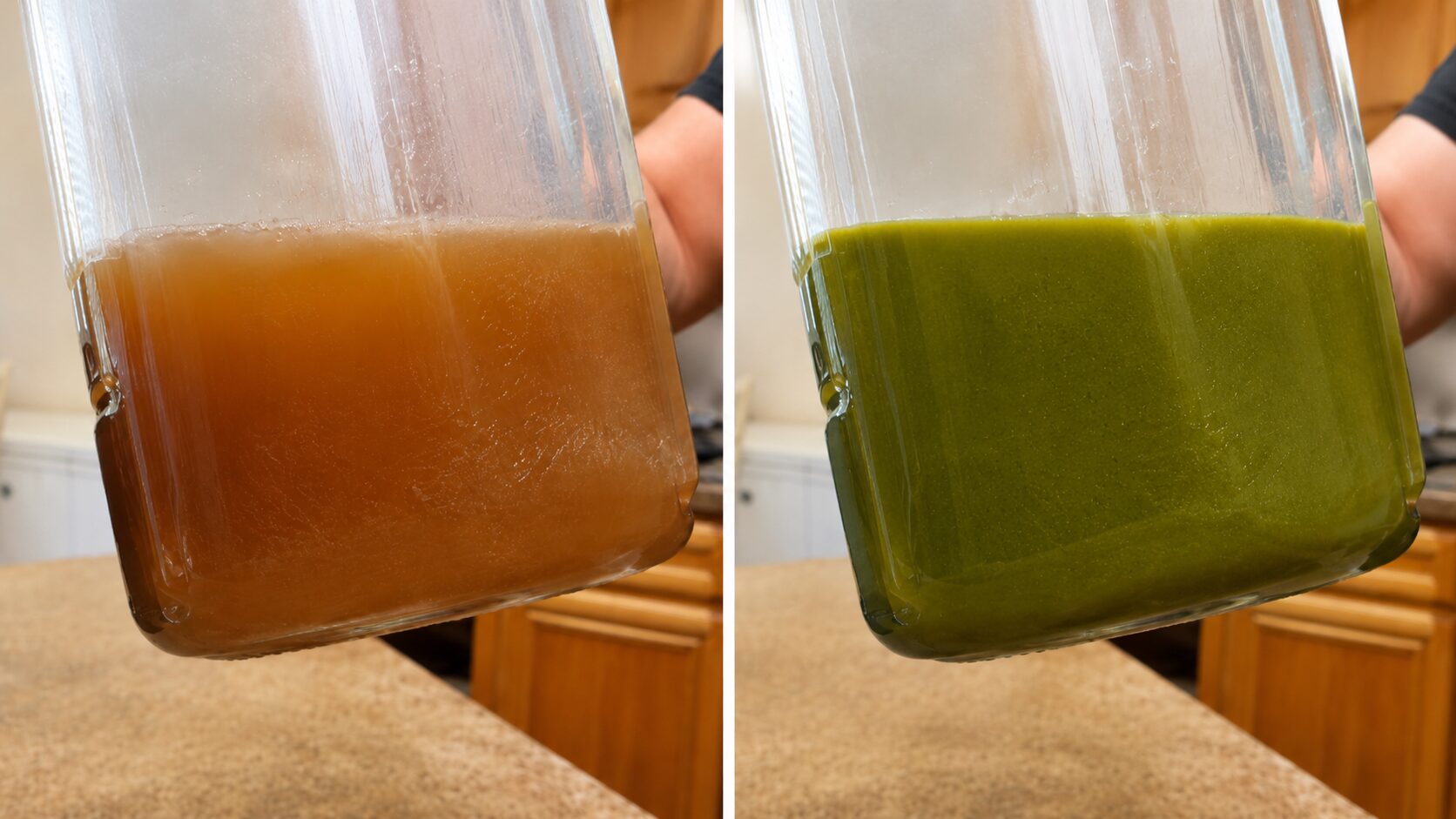
My take after years behind an espresso bar: for coffee, steep wins. Milk and espresso hide the green almost completely, and the roasted depth holds up better in the cup. Save the blend method for matcha or anything where the color is the whole point.
| Method | Active Time | Flavor | Color & Texture | Best For |
|---|---|---|---|---|
| Steep (this recipe) | ~30 min, no soak | Roasted, rounded | Cloudy, gold-green | Hot & iced coffee |
| Blend into milk | ~30 min + overnight soak | Fresh, lighter | Vivid green, silky | Matcha, cold foam |
Five ingredients — only the salt is optional:
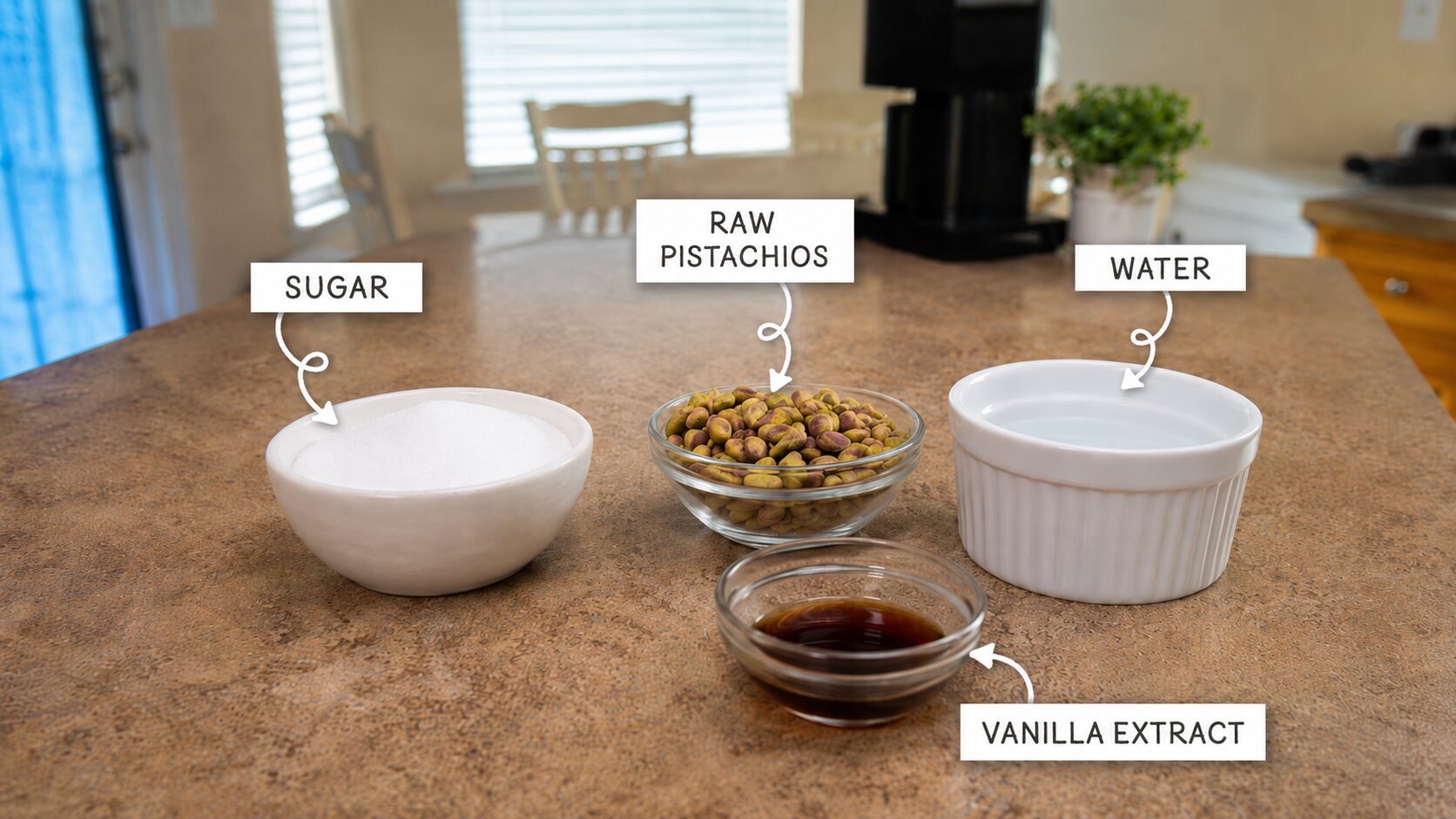
The whole thing, start to finish. About 30 minutes of actual work.
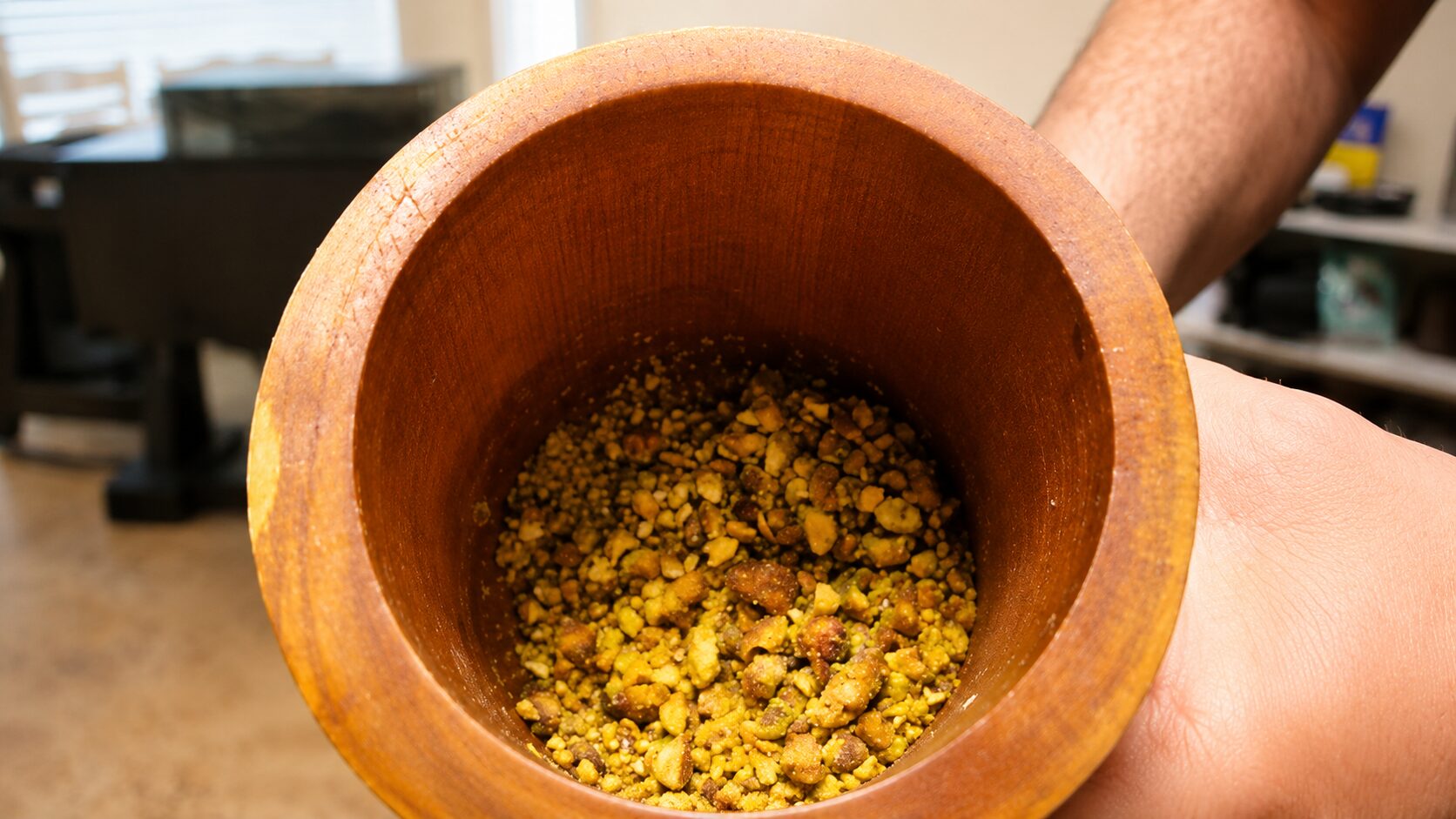
Roughly chop 1 cup of shelled, unsalted pistachios. A coarse chop pulls more flavor and strains cleaner than a fine grind.
Add the sugar, water, chopped pistachios, vanilla, and salt to a small saucepan — all at once. Heat over medium, stirring until the sugar dissolves, then drop to low and simmer gently for 5 minutes.
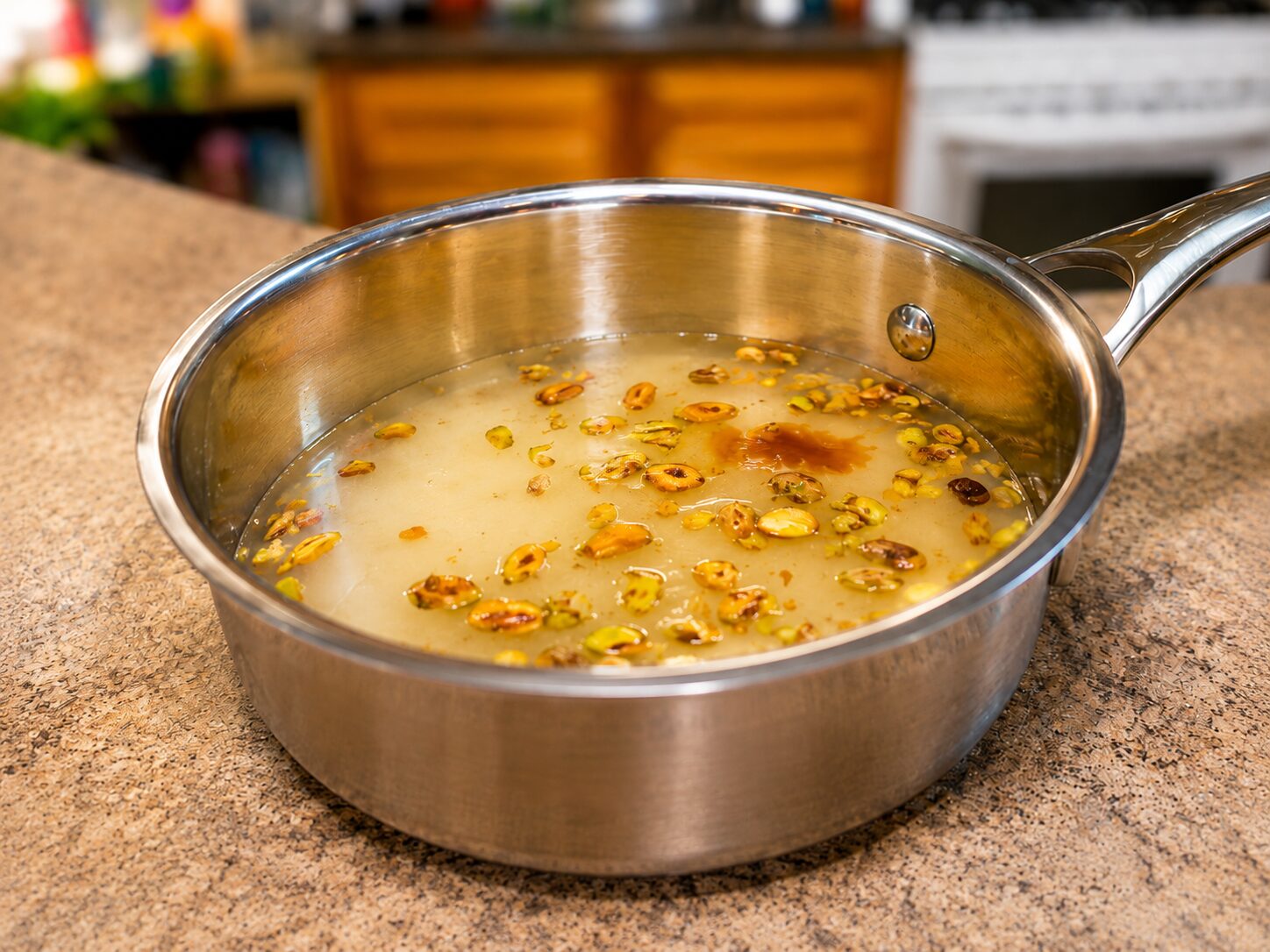
Pull the pan off the heat, cover, and steep 15–20 minutes. No longer.
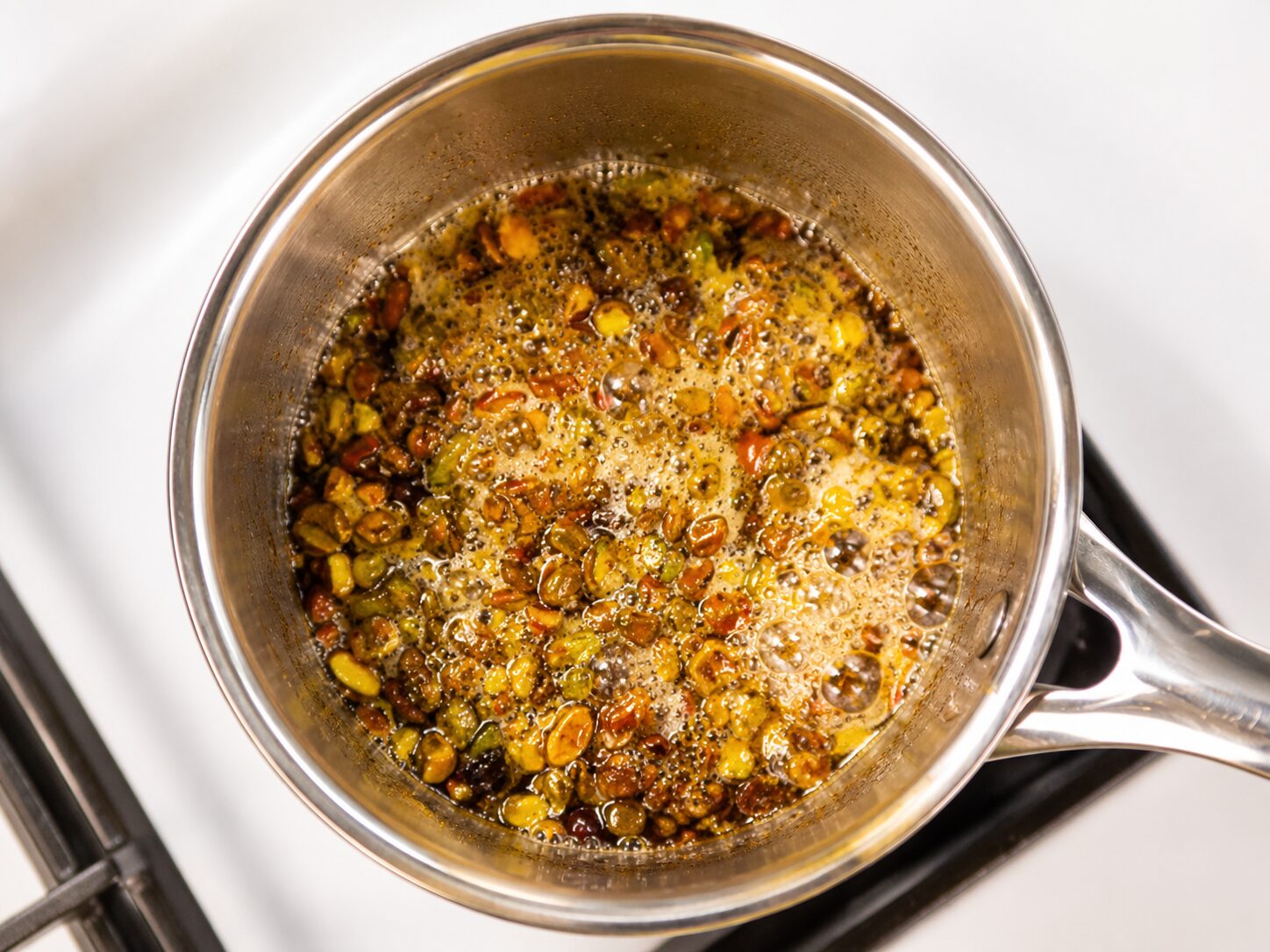
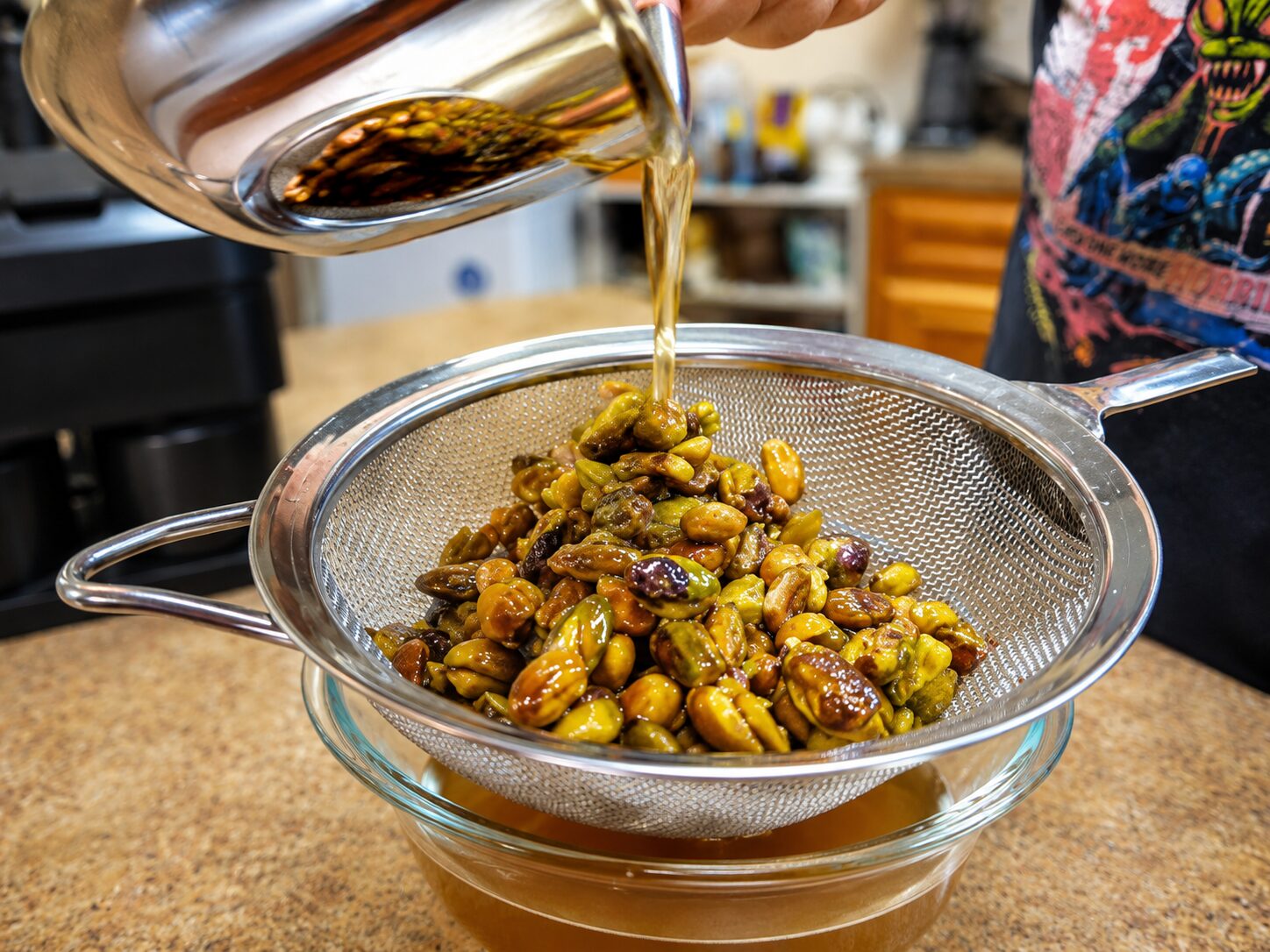
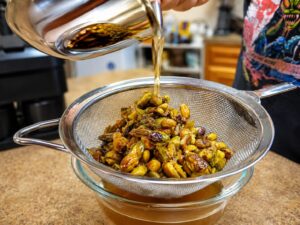
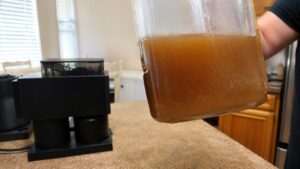
Strain through a fine mesh strainer into a clean glass jar. For a smoother finish, run it through cheesecloth a second time.
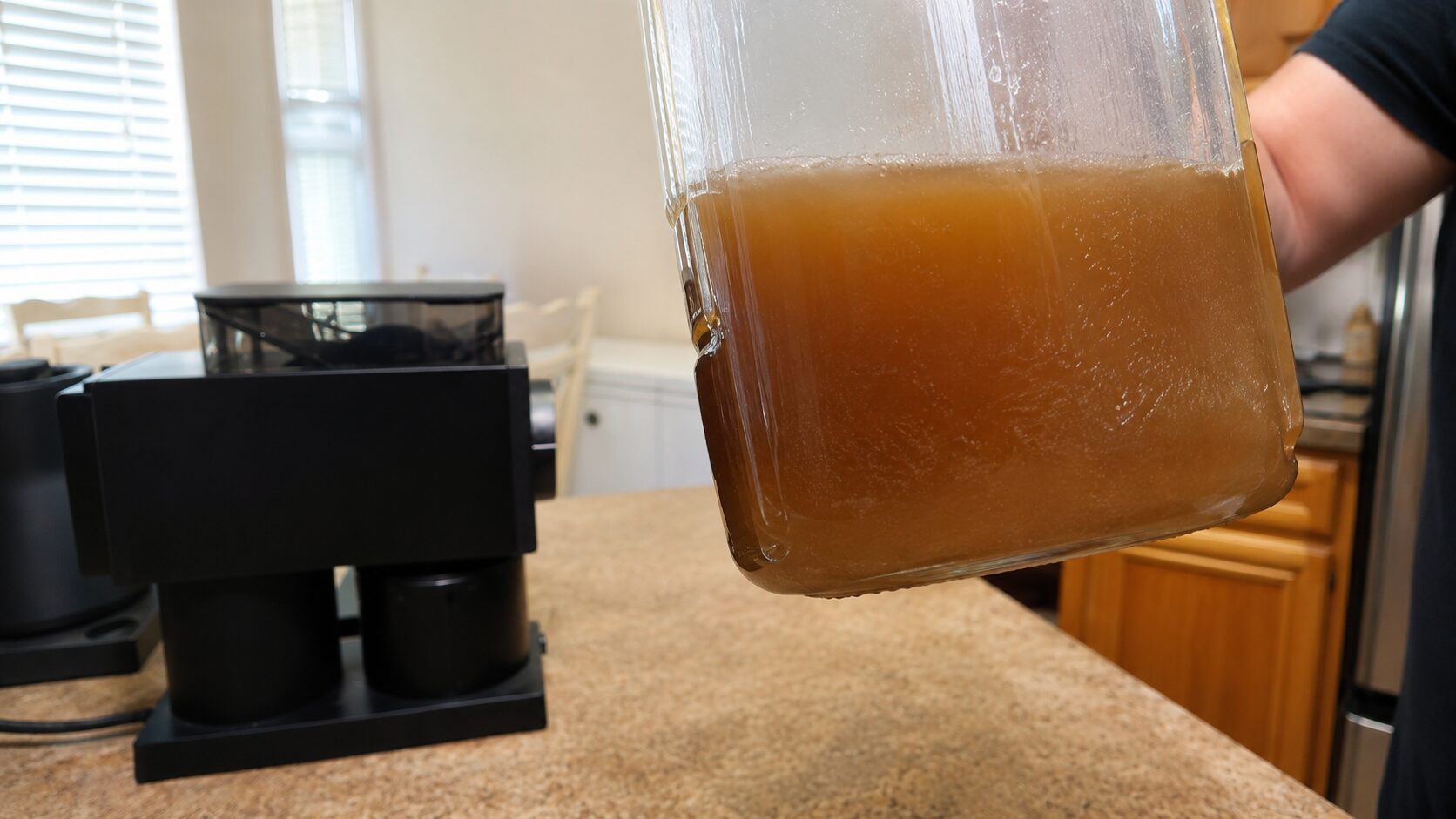
Cool completely before sealing. It keeps two weeks in the fridge. Shake before each pour — the nut fats settle, and that's normal.
Full quantities, timing, and a printable version are in the recipe card below.

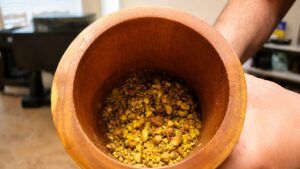
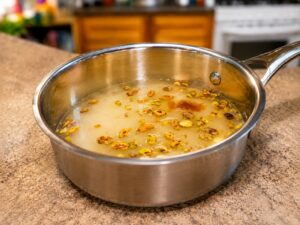
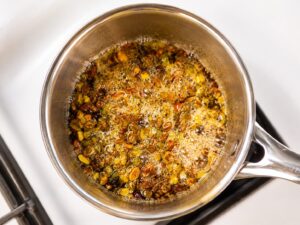
Once you've nailed the base recipe, there's a lot of room to play. A few variations I've tested and can vouch for:
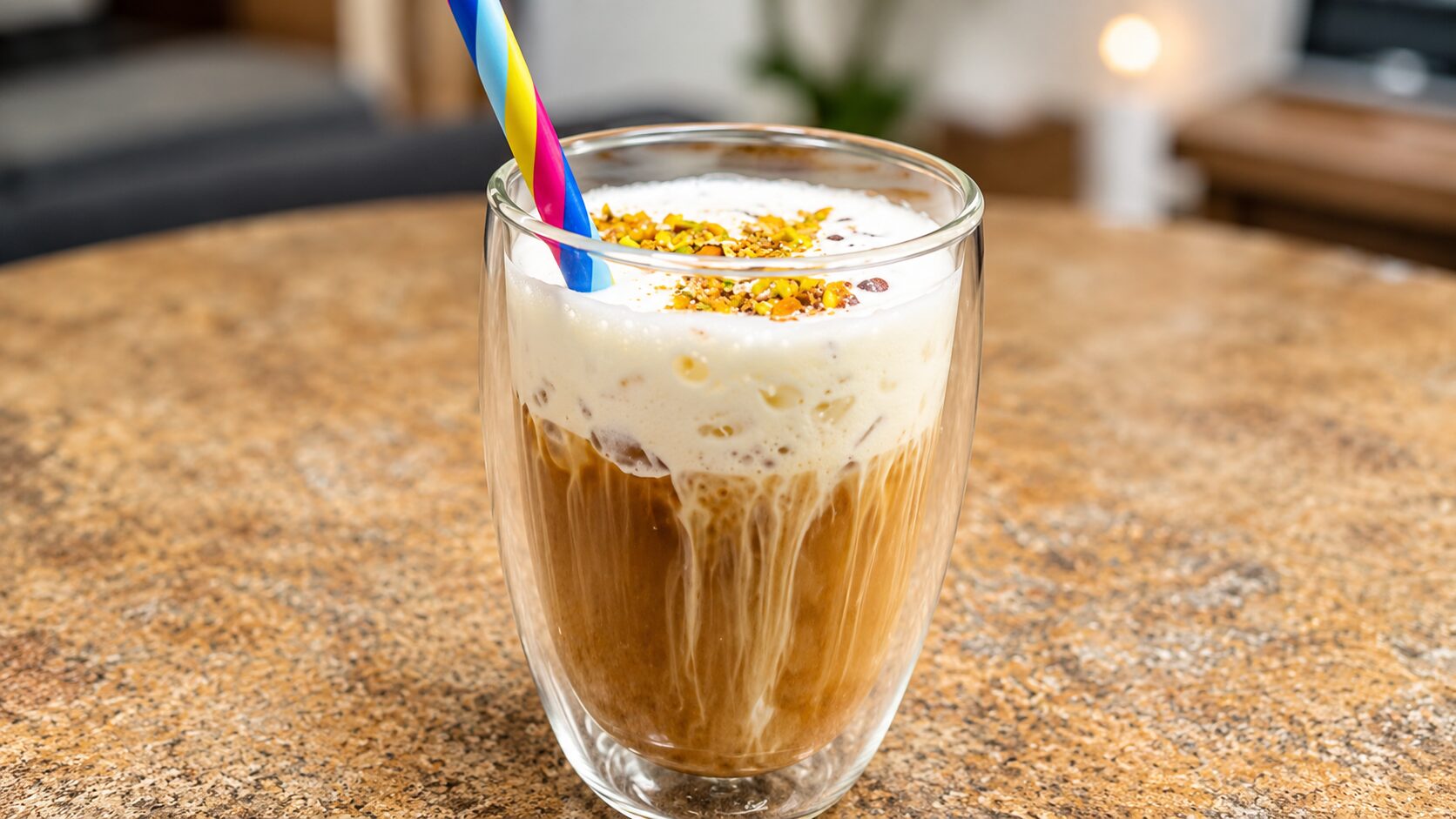
A few things can go sideways on your first batch. Here's what to watch for:
The syrup is cloudy. Totally normal. Real pistachio syrup is never crystal clear because of the nut fats. If it bothers you visually, strain twice through cheesecloth. The flavor is unaffected.
It tastes bitter or astringent. Usually a sign of over-steeping or too high a simmer. Next batch, keep the simmer gentle and limit the steep to 15 minutes.
It tastes weak or flat. Either the pistachios weren't chopped finely enough, or they weren't toasted. A quick 5-minute dry-pan toast before adding them to the syrup makes a big difference.
It's separating in the fridge. The nut fats will settle out — give the jar a good shake before each use. This is normal and isn't a sign of spoilage.
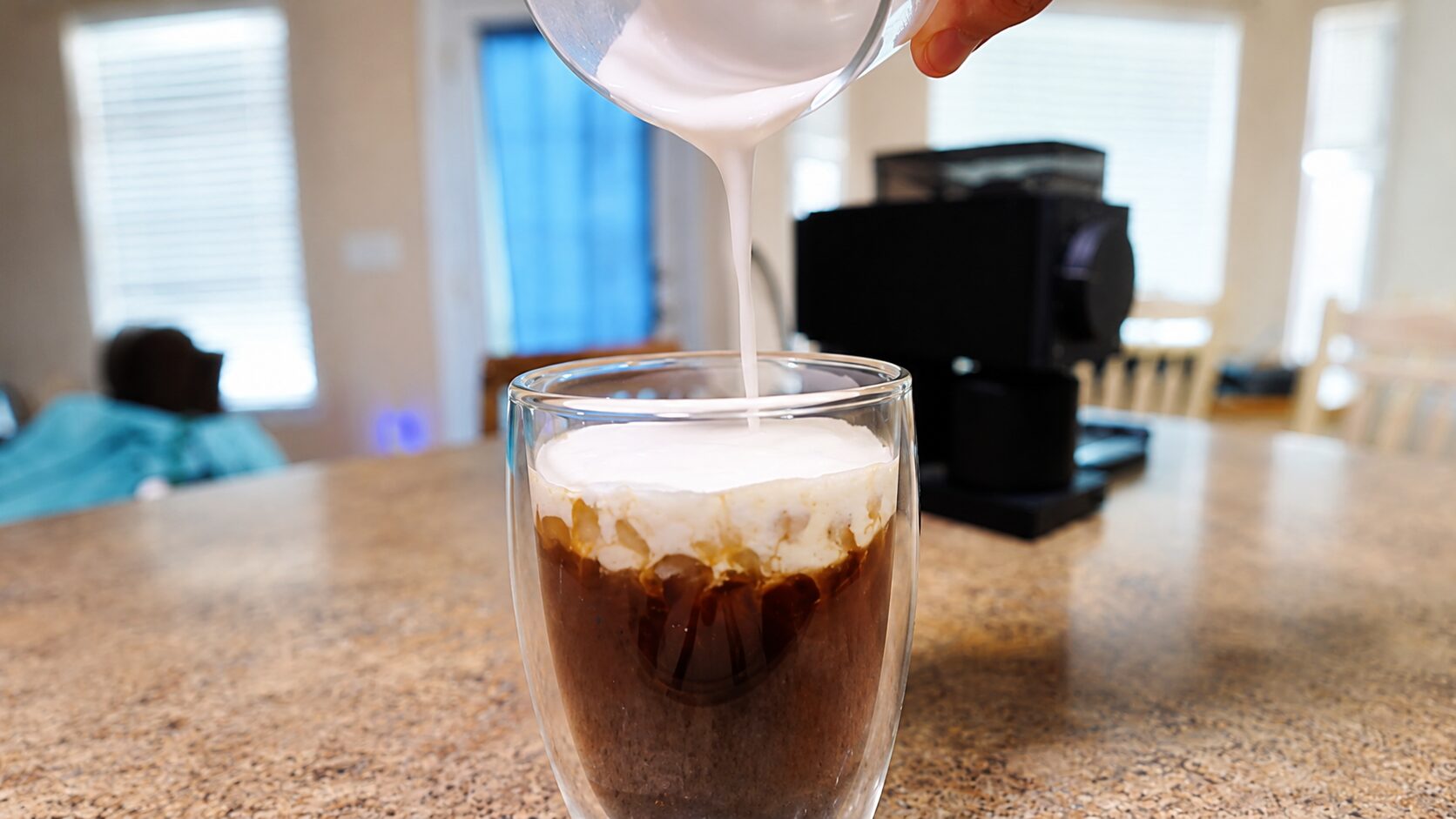
Homemade pistachio syrup is one of the most satisfying DIY coffee projects you can take on — not because it's hard, but because the gap between homemade and store-bought is so obvious. Real pistachios, real sugar, 30 minutes of work. That's the whole recipe.
If you've only had pistachio lattes from Starbucks or a Torani bottle, the first sip of a homemade version is genuinely a little surprising. It tastes like pistachios. Just pistachios. And once you've had it, it's hard to go back to anything that tastes like flavored candy.
Make a batch this weekend, bottle it up, and work your way through the rest of the syrup recipes from there. The method scales, the batches freeze, and your morning coffee routine is about to get a lot more interesting.

Former barista. Lifelong coffee obsessive. I started Coffee Slang to cut through the noise and share what actually matters — good recipes, honest gear takes, and a genuine love for the craft.
More About Nick →