
Home » Coffee Knowledge » coffee-recipes » Homemade Brown Sugar Cinnamon Syrup for Coffee (Better Than Store-Bought)
 Nick Puffer
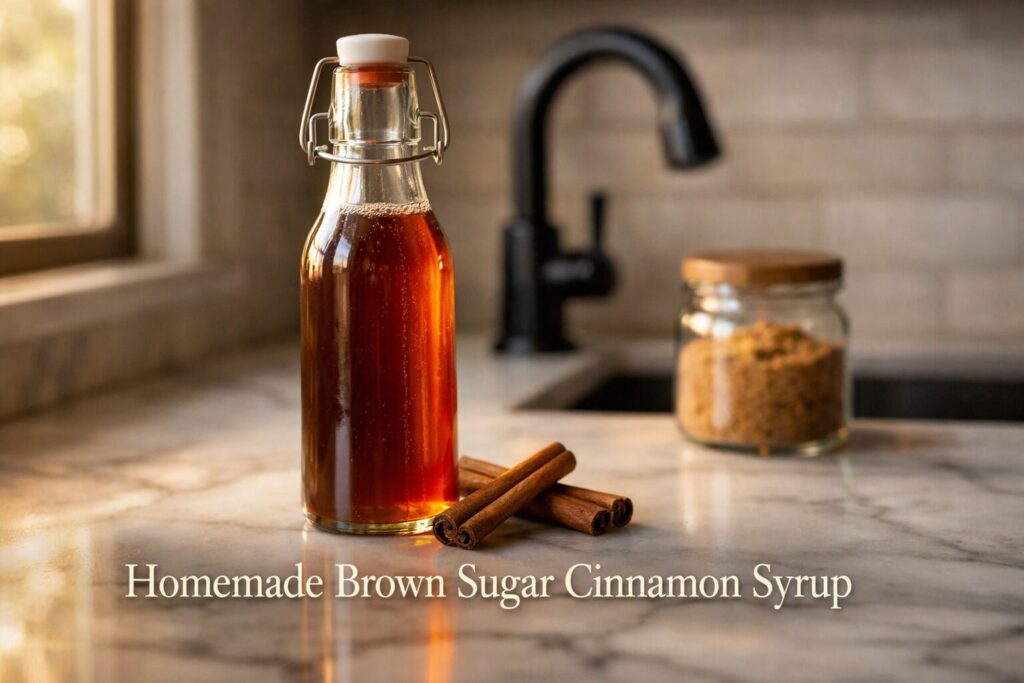
Brown sugar cinnamon syrup is the workhorse of the homemade syrup world — unpretentious, endlessly useful, and dramatically better when you make it yourself. The store versions and pump syrups use artificial flavoring to approximate it. The real thing uses brown sugar, whole cinnamon sticks, and about 15 minutes of your time. The difference is obvious from the first sip.
This is the syrup that powers the Brown Sugar Shaken Espresso at Starbucks — one of the most-ordered drinks on their menu for a reason. But the homemade version has a warmth and depth that the commercial one doesn't quite reach. Once you've made a batch, you'll find yourself reaching for it in everything from morning lattes to cold brew on ice.
It's a flavored simple syrup — sugar dissolved in water — with two key upgrades over a standard recipe: brown sugar instead of white, and whole cinnamon sticks steeped in while it's still hot.
Brown sugar brings molasses into the equation. That molasses content is what gives this syrup its characteristic depth — a toasty, slightly caramel undertone that white sugar simply can't replicate. The cinnamon stacks on top of that with warmth and spice. Together, they make a syrup that doesn't just sweeten a drink — it adds a whole flavor dimension.
You can use light brown sugar for a subtler result or dark brown sugar for something richer and more molasses-forward. Either works. The cinnamon sticks (not ground cinnamon — more on that below) infuse the syrup with flavor without turning it gritty or cloudy.
Brown sugar and cinnamon have been paired in cooking for centuries — in everything from oatmeal to baked apples to churros. The combination translates into coffee because both flavors are naturally complementary to roasted, bitter espresso. The sweetness cuts the bite; the cinnamon adds warmth without overwhelming.
As a specific coffee syrup, brown sugar cinnamon exploded in popularity when Starbucks launched the Iced Brown Sugar Oat Milk Shaken Espresso in 2021. The drink became one of their most viral menu items almost immediately, which sent a wave of home coffee drinkers searching for a way to make it themselves. The homemade version predates that launch — people have been making brown sugar cinnamon syrups at home for years — but the Starbucks moment made it a household name.
Today it sits alongside vanilla and caramel as one of the most-searched homemade coffee syrups. The difference from those two is that brown sugar cinnamon is genuinely harder to replicate with a store-bought pump syrup — the molasses depth and real cinnamon warmth don't survive the artificial flavoring process particularly well. This is one where making it yourself genuinely pays off.
Warm, rounded, and complex — that's the short answer. The brown sugar base tastes like a richer, toastier version of regular sweetness, with faint caramel and molasses notes running underneath. The cinnamon adds a gentle heat that lingers in the back of your throat without being sharp or medicinal the way ground cinnamon can be.
In an espresso drink, it softens the bitterness without masking the coffee flavor. In a cold brew or iced latte, it gives the drink a depth that feels more intentional than just "sweet." It's the kind of syrup that makes a drink taste like it was made by someone who thought about it.
It's worth understanding how this syrup sits among the other syrups in your rotation — because several overlap in flavor territory and knowing the differences helps you use each one correctly.
| Syrup | Base Sugar | Key Flavor Notes | Best In |
|---|---|---|---|
| Brown Sugar Cinnamon | Brown sugar | Molasses, warm spice, toasty | Iced espresso, cold brew, oat milk lattes |
| Cinnamon Dolce | White sugar | Sweet, clean cinnamon, dessert-like | Hot lattes, holiday drinks |
| Honey Cinnamon (Café Miel) | Honey | Floral, complex, lightly spiced | Hot lattes, oat milk |
| Vanilla Bean | White sugar | Clean, sweet, floral vanilla | Hot and iced lattes, cold brew |
| Caramel | White sugar (caramelized) | Buttery, rich, slightly bitter | Lattes, macchiatos, cold brew |
The clearest distinction is between brown sugar cinnamon and cinnamon dolce. Both are cinnamon syrups, but cinnamon dolce uses white sugar — the result is cleaner and sweeter, leaning toward dessert. Brown sugar cinnamon is earthier and more complex. If you're making an iced drink or anything with oat milk, brown sugar cinnamon is almost always the better call.
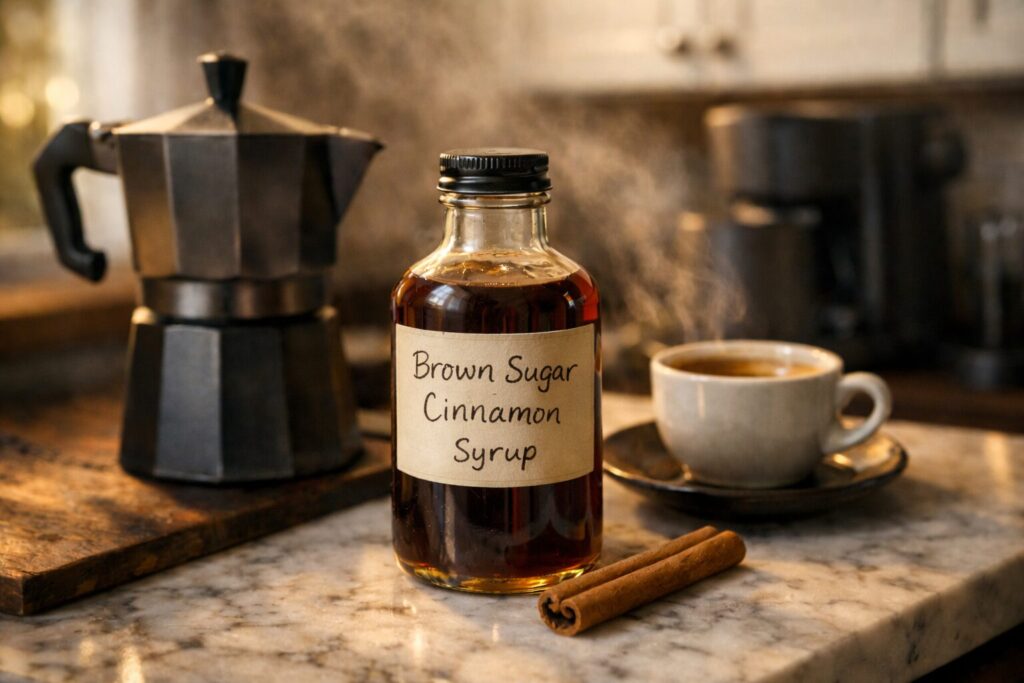
This is the most common mistake people make when attempting this syrup for the first time. Ground cinnamon does not work here — not in any meaningful way. When you add ground cinnamon to a hot syrup, it suspends in the liquid temporarily and then settles into a gritty layer at the bottom of the jar. The flavor is harsh and one-dimensional, and no amount of straining fully removes the texture.
Whole cinnamon sticks work because they steep like a tea. The heat pulls the cinnamon oils out slowly and evenly, leaving you with a syrup that has warmth and depth without any grit or bitterness. Two sticks is the right amount for a standard 1-cup batch — enough to taste clearly but not so much that it turns medicinal.
Ceylon cinnamon (often labeled "true cinnamon") gives a lighter, more delicate flavor with citrus undertones. Cassia cinnamon — the standard supermarket variety — is bolder and spicier. Either works. Cassia is more common and gives you the flavor most people associate with cinnamon in coffee drinks.
The process is the same as any simple syrup — equal parts sugar and water, dissolved over medium heat. The brown sugar and cinnamon sticks are the only variables. It takes about 15 minutes start to finish, and the result keeps for 2–3 weeks in the fridge.
Makes ~1¼ cups · Under $2 per batch
Ingredients
Method
Want it richer?Use a 2:1 ratio — 1 cup brown sugar to ½ cup water — for a thicker, more concentrated pour that sweetens faster and keeps a day or two longer. Ideal for iced drinks where dilution from ice is a factor.
To use it in a latte, add the syrup to your cup first, then pour your espresso or strong coffee over it — this helps it incorporate before the milk goes in. For the classic brown sugar shaken espresso, combine the syrup with espresso and ice in a jar, shake hard for 15 seconds, then pour over fresh ice. A handheld milk frother will froth oat milk to finish the drink the way a coffee shop would.
The base recipe is a solid starting point, but a few small changes open up noticeably different flavor directions.
Add half a teaspoon of vanilla extract or a small piece of vanilla bean to the steep along with the cinnamon sticks. The vanilla softens the molasses edge and gives the syrup a rounder, more complex character. This version works especially well in hot lattes.
Drop a 2-inch strip of fresh orange peel into the steep. The citrus oils pick up the cinnamon's warmth and add a brightness that plays well in cold brew and iced drinks. Remove the peel along with the cinnamon sticks before bottling.
Add a few whole cardamom pods and a small piece of fresh ginger alongside the cinnamon. The result is closer to a chai spice syrup — a good move if you're making an oat milk latte and want something with more complexity.
Swap standard brown sugar for dark brown sugar or muscovado. The molasses content doubles, and the syrup takes on a deeper, almost malty character. Skip the cinnamon entirely and you have a standalone brown sugar syrup that pairs beautifully with cold brew.
Most problems with this syrup trace back to one of three places: temperature, steeping time, or storage.
Syrup is grainy or crystallizing: Brown sugar syrups can crystallize if the sugar-to-water ratio is too high or if the syrup cools too quickly. Warm the jar gently in a bowl of hot water — the crystals will dissolve. Adding a small squeeze of lemon juice during cooking can prevent crystallization from happening in the first place.
Cinnamon flavor is too faint: You either pulled the sticks too early or your cinnamon is stale. Taste at 20 minutes — if the cinnamon is barely there, leave the sticks in for another 10 minutes and taste again. Fresh sticks make a significant difference; old ones lose their essential oils and steep flat.
Syrup looks cloudy: A fine haze in a brown sugar syrup is normal — that's the molasses. Visible particles or a thick cloudiness means it wasn't strained well enough. Run it through a fine mesh strainer again, or use cheesecloth. Cloudy syrup is still safe to use.
Syrup spoiled faster than expected: Check your jar. Even a trace of moisture from a wet spoon or an incompletely dried container will shorten shelf life significantly. Always use a clean, fully dry glass jar and never double-dip a wet spoon into the bottle.
Brown sugar cinnamon syrup is one of the most useful things you can keep in your home coffee setup. It takes 15 minutes to make, costs under $2 a batch, and immediately upgrades everything from a basic iced latte to a cold brew with oat milk. The homemade version has a warmth and depth that commercial syrups don't replicate — the molasses in the brown sugar does something that artificial flavoring simply can't.
Use whole cinnamon sticks, not ground. Steep for 20–25 minutes. Store in a clean glass jar. That's genuinely all it takes. Once you've made it once, you'll understand why this is the syrup coffee shops lean on when they want something that tastes considered and intentional.
For the full recipe with measurements and step-by-step instructions, head to the homemade latte syrups hub — or go straight to the brown sugar shaken espresso recipe if you already know what you want to make.

Former barista. Lifelong coffee obsessive. I started Coffee Slang to cut through the noise and share what actually matters — good recipes, honest gear takes, and a genuine love for the craft.
More About Nick →