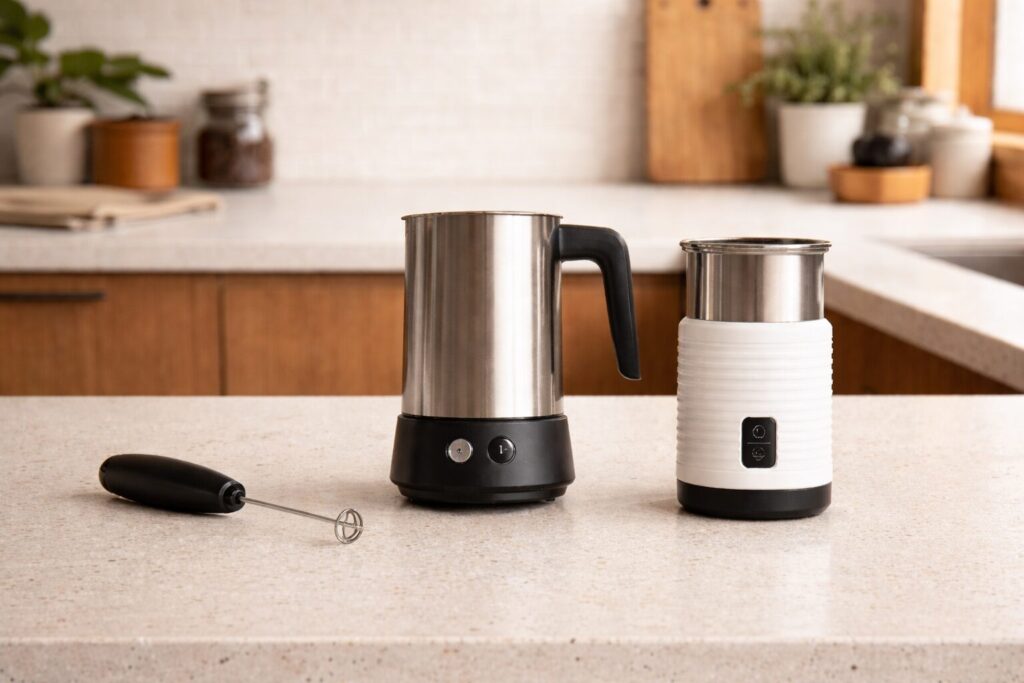
Oat milk needs a frother that runs at lower temperature and higher speed than what works for dairy. The best frothers for oat milk are electric automatic models or high-RPM handheld wands — anything that heats gently and incorporates air quickly before the oat sugars break down. Barista-blend oat milk makes a bigger difference than the frother itself.
Why Oat Milk Behaves Differently Than Dairy
Dairy milk froths reliably because of its protein and fat structure — the proteins stretch and trap air bubbles while fat adds stability and richness. Oat milk doesn't have that same protein matrix. What it has instead is starch and natural sugars, which create a foam that's lighter, faster to collapse, and very sensitive to heat.
Go too hot and the starches break down, the sugars scorch, and you're left with a thin, watery layer of flat bubbles that separates within seconds. Keep it under 150°F and froth quickly, and oat milk can produce a genuinely good, silky microfoam — especially with a barista-blend formula that includes added oils and stabilizers to mimic dairy's behavior.
The short version: oat milk rewards a frother that gives you temperature control and speed. Those two things matter more here than with any other non-dairy milk.
Barista tip: Always use cold oat milk straight from the fridge. Cold milk — dairy or non-dairy — froths better because the proteins and starches have more room to expand as they heat. Room temperature oat milk produces noticeably flatter results.
What to Look for in a Frother for Non-Dairy Milk
Not every frother handles oat milk equally well. Here are the four things that actually matter when you're frothing plant-based milks:
Temperature Control
Oat milk should be frothed between 130–150°F. Electric frothers with adjustable heat settings protect the foam. Handheld wands leave temperature control to you.
Motor Speed (RPM)
Faster spinning means more air incorporated in less time — critical for oat milk, which has a narrow window before the foam degrades. Look for 15,000+ RPM in handheld wands.
Whisk Design
A tight, small-diameter whisk coil creates finer, more stable bubbles than a wide coil. Fine microfoam holds longer and pours better into lattes and cortados.
Capacity
Electric frothers with a larger jug let you froth at least 4–6 oz in one go. Important for oat milk lattes where you need enough volume to pour properly.
Which Type of Frother Works Best for Oat Milk?
There are three main frother types, and they each have different trade-offs when it comes to non-dairy milk.
Electric Automatic Frothers
These are the most consistent option for oat milk. You pour the milk in, select a setting, and the machine heats and froths simultaneously — removing the human variable from temperature control entirely. The best models have a dedicated cold foam setting (no heat) and a lower-temperature hot foam setting, both of which suit oat milk well. The trade-off is cost and counter space.
Handheld Wand Frothers
A high-quality handheld frother is the most affordable entry point and works well for oat milk if you're disciplined about temperature. Heat your milk separately on the stove or in the microwave to around 140°F, then froth immediately. The window is short — oat milk starts to separate quickly once heat is applied — so a fast, powerful wand matters. Cheap wands with slow motors are the worst option for non-dairy milk specifically.
French Press Method
If you're not ready to buy a dedicated frother, a French press is actually a solid option for oat milk — better than a mason jar shake, because the plunger pushes air through the milk more aggressively. Heat the oat milk first, pour into the French press, and pump for 30–40 seconds. For a full breakdown of no-frother methods, see how to froth milk without a frother.
If you're weighing whether a handheld or electric model is the right call for your setup, the handheld vs electric milk frother guide lays out the full comparison.
How Different Non-Dairy Milks Compare
Oat milk is the most popular non-dairy choice for frothing, but it's not the easiest. Here's how the main alternatives stack up so you know what to expect from whichever milk you're working with.
Milk
Frothing Difficulty
Foam Quality
Max Temp
Notes
Oat (barista blend)
Medium
Creamy, good microfoam
150°F
Best non-dairy option overall; use barista blend
Oat (regular)
Medium-Hard
Lighter, less stable
140°F
Thinner, separates faster — manageable but inconsistent
Soy
Easy
Dense, holds well
155°F
Froths most like dairy; can taste beany in light roasts
Almond
Hard
Thin, large bubbles
130°F
Low protein = poor foam; barista blend helps significantly
Coconut
Medium
Rich but heavy
150°F
Strong flavor; works well in chai and spiced drinks
Pea protein
Easy
Thick, very stable
160°F
Closest to dairy in foam structure; neutral flavor
← Scroll to see full table
Our Top Frother Picks for Oat Milk
Heads up: Some links on this page are affiliate links. If you buy through them, I may earn a small commission at no extra cost to you. I only recommend products I'd actually use. — Nick
For more options at each price point and full pros and cons, see the best milk frothers for home use guide. And if you're leaning toward a budget electric jug, my Bodum Bistro review covers exactly how it handles barista-edition oat milk.
Budget Pick · Under $15
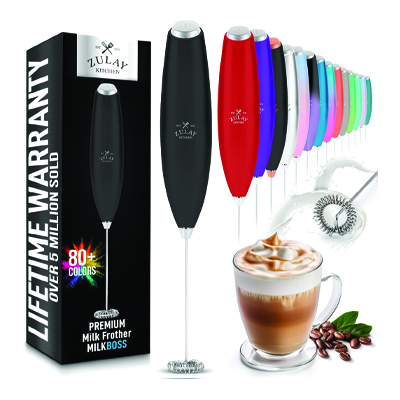
Zulay Kitchen Original Milk Boss Frother
Best For: Daily oat milk lattesTemp Control: ManualFoam Type: Microfoam
The Zulay Milk Boss is the handheld wand I'd point most people to first. It has a high-torque motor with a tight 25-ring spiral whisk that whips up foam in about 15–20 seconds — fast enough to work with oat milk before the foam window closes. It runs on two AA batteries, which means no charging, no waiting, and no cord to manage. Heat your oat milk separately to around 140°F, submerge the whisk just below the surface, and froth immediately.
Worth knowing: Battery-powered means you'll swap AAs every few months with daily use. If you'd rather charge than replace, Zulay also makes a rechargeable version for a few dollars more — same motor, USB-C charging instead.
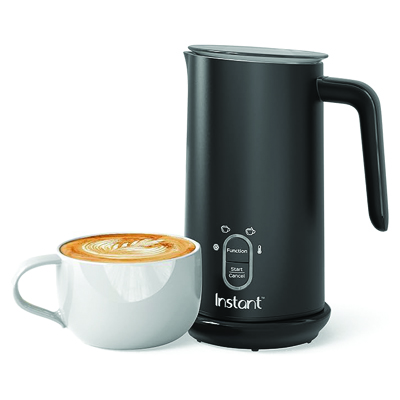
Best For: Consistent results every timeTemp Control: AutomaticFoam Type: Hot foam + cold foam
The Instant MagicFroth is the mid-range pick I keep coming back to. It has three temperature settings (cold, warm, hot) paired with three foam intensities — that level of control is rare at this price and makes a real difference with oat milk, where the sweet spot is warm rather than hot. It froths up to 8.5 oz in one go, handles oat and almond milk consistently, and runs quietly enough that it won't disrupt anyone else in the house.
Worth knowing: Full frothing cycles take about 2–3 minutes, slightly slower than the Aeroccino. The precision pour spout and cool-touch handle make pouring clean and safe even with hot milk — a small thing that matters more than you'd expect at 6am.
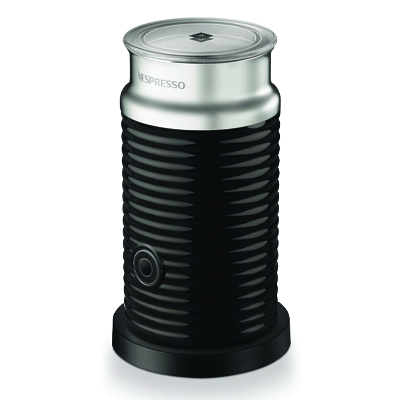
The Aeroccino 4 is consistently the top-tested electric frother across independent reviews, and for good reason. Four settings — hot dense foam, hot airy foam, cold dense foam, cold airy foam — cover every non-dairy application. It froths in under 90 seconds, runs nearly silent, and produces genuinely luscious microfoam whether you're using oat, soy, or dairy. The stainless steel carafe is dishwasher-safe and the compact footprint won't crowd your counter.
Worth knowing: It maxes out at 4 oz of foam (8 oz for heating only) — fine for one or two drinks, but not ideal if you're regularly making drinks for multiple people. If volume is a priority, the Instant MagicFroth's larger 8.5 oz capacity is the better call at lower cost.
The right frother gets you halfway there. These habits get you the rest of the way:
Always use barista-blend oat milk. Regular oat milk froths, but barista blends are specifically formulated with added oils and stabilizers that create dramatically more stable foam. Oatly Barista, Califia Barista, and Minor Figures are the most consistent performers.
Start cold. Cold milk from the fridge produces better foam than room temperature milk regardless of the frothing method.
Don't overheat. 140–150°F is the sweet spot. Above 155°F the sugars start to break down and foam quality drops sharply. Use a thermometer until you have a feel for it.
Froth immediately after heating. Oat milk's foam window is short. If you heat it and let it sit for two minutes before frothing, you'll get noticeably worse results than if you froth right away.
Tap and swirl before pouring. After frothing, tap the container on the counter and swirl gently to integrate any larger bubbles. This is standard barista practice for any milk — it makes the foam smoother and pours cleaner.
For a full walkthrough of how to use oat milk in espresso drinks — ratios, recipes, and technique — the oat milk latte recipe covers it in detail.
Ready to Find Your Frother?
We tested frothers across every price point — handheld wands, electric jugs, and premium automatics — and ranked the best options for home use. See the full breakdown with specs, pros and cons, and our top picks.
If oat milk still won’t hold foam with a good frother, it’s almost always the milk — barista blends behave differently from regular cartons. Why your milk won’t froth breaks down the non-dairy causes specifically.
Frequently Asked Questions
The three most common reasons: the milk is too hot (above 155°F breaks down the starches and kills the foam), you're using regular oat milk instead of a barista blend, or your frother's motor is too slow to incorporate air before the foam window closes. Try switching to a barista-blend oat milk first — it's the single biggest upgrade you can make without buying new equipment.
Barista-blend formulations are significantly better than regular oat milk for frothing. Oatly Barista Edition, Califia Farms Barista Blend, and Minor Figures are the most consistently recommended by home baristas. They contain added rapeseed oil and stabilizers that help the foam hold its structure in a way regular oat milk can't match.
Yes — oat milk cold foam works well and is one of the easier non-dairy frothing applications because you're not fighting temperature management. Use barista-blend oat milk straight from the fridge and froth for 30–45 seconds with a handheld wand or use the cold foam setting on an electric frother. The result is a light, pourable foam that works well over iced lattes and cold brew. See the no-frother frothing guide for the mason jar cold foam method if you don't have a dedicated frother yet.
Oat milk is significantly easier to froth than almond milk. Almond milk has very low protein content, which means it produces large, unstable bubbles that collapse almost immediately — even with a barista blend. Oat milk's starch content gives the foam more body and hold time. If you're switching from almond to oat milk specifically for frothing, expect a noticeable improvement.
Not a specially designed one, but you do need a frother that handles temperature well and has enough motor speed to work quickly. Any quality electric automatic frother or high-RPM handheld wand will work for oat and soy milk. Where cheaper frothers fall short is motor speed — too slow and the foam degrades before it sets. See the full best milk frothers guide for model-specific recommendations across every budget.
140–150°F is the ideal range for hot oat milk foam. Below 130°F the milk won't integrate properly with espresso. Above 155°F the natural sugars start to break down and the foam becomes thin and flat. If your electric frother runs at a fixed temperature, check the spec before buying — some budget models run at 160°F or higher, which is too hot for oat milk.
Former barista. Lifelong coffee obsessive. I started Coffee Slang to cut through the noise and share what actually matters — good recipes, honest gear takes, and a genuine love for the craft.