
Quick Answer
Black eye coffee is drip coffee with two shots of espresso poured in — the double-shot version of a red eye. It contains roughly 300–350mg of caffeine, takes five minutes to make, and needs no special technique beyond pulling a good espresso shot and pouring it on top of your drip coffee.
Black eye coffee is a cup of drip coffee with two shots of espresso poured directly into it. That's the whole drink — no milk, no syrups, no fuss. Just brewed coffee and a double shot of espresso combined into one aggressively caffeinated cup.
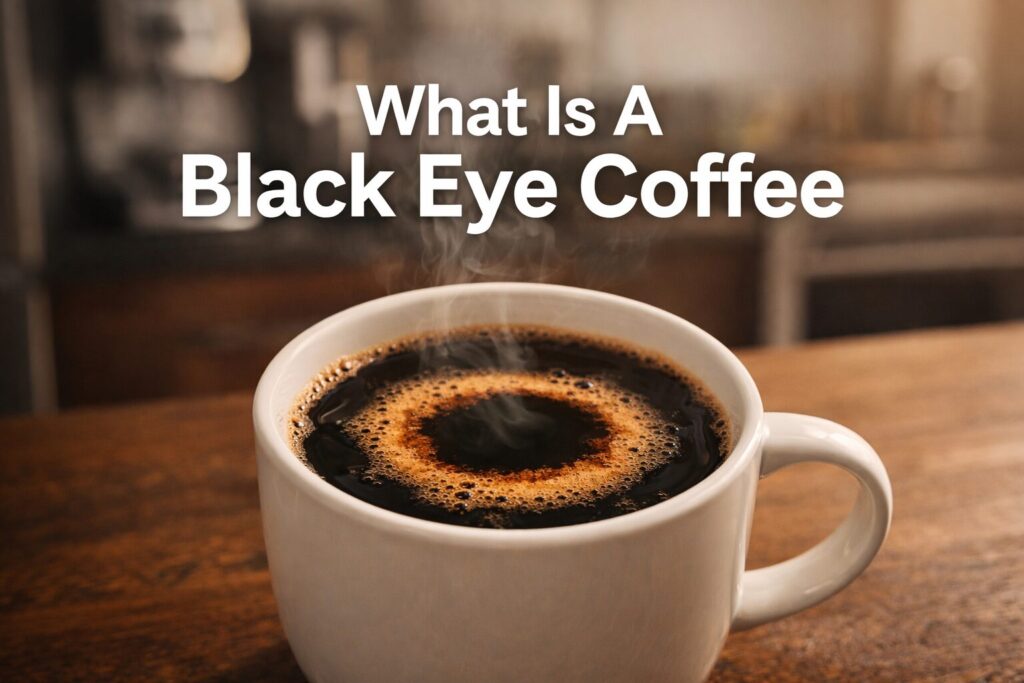
The name comes from the appearance: when you pour espresso into drip coffee, the crema floats on top and creates a dark circle that looks like — you guessed it — a black eye. It's a cousin of the red eye coffee, which uses a single espresso shot instead of two.
If you've ever needed coffee to actually work, this is the drink for that day.
The red eye vs. black eye distinction is simple but worth knowing, because coffee shops aren't always consistent with their naming. Here's how the most common convention breaks down:
| Name | What's in it | Caffeine (approx.) |
|---|---|---|
| Red Eye | Drip coffee + 1 espresso shot | ~190–230mg |
| Black Eye ← you are here | Drip coffee + 2 espresso shots | ~300–350mg |
| Dead Eye / Green Eye | Drip coffee + 3 espresso shots | ~400mg+ |
The logic scales linearly: more shots, more dramatic name, more caffeine. Some cafés use different terms — you might hear "shot in the dark" for a red eye, or a barista might look at you sideways if you order by name at all. When in doubt, just describe what you want: "a drip coffee with two espresso shots."
For a deeper dive into the one-shot version, check out the full red eye coffee guide.
The technique is straightforward, but the order of operations matters more than most people realize.
That's it. No recipe required — though if you want exact ratios and a no-espresso-machine version, the full black eye coffee recipe has you covered.
☕ No Espresso Machine?
A Moka pot is your best bet. It brews at higher pressure than a standard drip machine and produces a concentrated shot that behaves similarly to espresso when combined with drip coffee. An AeroPress with a fine grind and short steep time also works well. What won't work: using your regular drip machine to brew "strong coffee" as a substitute — the concentration isn't high enough, and you'll end up with a weak version of the drink.
For reference, the FDA's generally cited daily limit for healthy adults is 400mg. A black eye puts you at roughly 75–80% of that in a single cup. It's not a casual morning sip — it's a deliberate decision.
Curious about the relationship between coffee strength and caffeine more broadly? This piece on whether strong coffee actually has more caffeine explains why the answer is more nuanced than you'd expect.
Brew the drip coffee hot, let it cool slightly, then pour over ice before adding the espresso shots. Cold brew concentrate works even better as the base — it's less bitter and stands up well to the double shot. One of the cleaner ways to make iced coffee at home without a lot of extra gear.
Add 2–3 oz of steamed milk after the espresso. This softens the bitterness significantly and makes it more approachable if straight black eye coffee is a bit much. It sits in an interesting middle ground between a latte and a traditional black eye.
Ask for a "black eye" at a specialty shop and most baristas will know what you mean. At a chain, describe it: "a 12-ounce drip with two espresso shots added." If you want it iced, specify that upfront — the build order changes depending on whether they'll pour espresso over cold brew or brew fresh.
The flavor of a black eye coffee comes almost entirely from your two components — so bean quality matters more here than in drinks with milk or syrups to hide behind.
For the drip base: Medium-dark roasts work best. You want body and some bitterness tolerance, since the espresso will amplify whatever characteristics are already in the cup. Light roasts can work but sometimes read as too bright or acidic when combined with espresso.
For the espresso: A blend with some robusta or a dark-roasted single origin will give you more crema and a fuller body. If you're using the same beans for both — which is totally valid — a medium-dark roast with chocolate or nutty tasting notes is a reliable choice.
The quality of your drip brewer plays a bigger role than most people account for. A brewer that hits the right temperature (195–205°F) with a proper bloom makes a noticeable difference in the base. The ultimate drip coffee maker guide covers the best options at every price point if you're due for an upgrade — including the Simply Good Coffee Maker, which is a strong pick for everyday black eye brewing without breaking the bank.

Simply Good Coffee Maker
If you want a clean, full-bodied drip base for your black eye without spending Moccamaster money, the Simply Good Coffee Maker is the pick. It hits the right brew temperature, produces a consistently solid cup, and doesn't get in its own way — which is exactly what you need when espresso is doing the heavy lifting. See the full breakdown in the Simply Good Coffee Brewer review.
See the Full Review →Essentially, yes — a black eye and a double red eye describe the same drink. The terminology varies by region and coffee shop. "Black eye" is the more widely used name for drip coffee plus two espresso shots.
Yes, and it's actually a great variation. Cold brew concentrate as the base produces a smoother, less acidic drink. Use a 1:4 cold brew concentrate to water ratio before adding the espresso shots, or use straight concentrate if you want maximum intensity.
An Americano is espresso diluted with hot water — there's no drip coffee involved. A black eye uses brewed drip coffee as the base, which has its own distinct flavor profile from the filter brewing process. The two drinks taste noticeably different even at similar caffeine levels.
Two likely causes: over-extracted espresso (pull time over 35 seconds) or a low-quality drip base. Fix the espresso first — a 25–30 second pull is the target. If that's dialed in and it's still bitter, look at your drip coffee. Old beans, too-fine a grind for your drip brewer, or water that's too hot can all push bitterness into the cup before the espresso even enters the picture.
It depends on your tolerance and what else you've had. At 300–350mg, a black eye puts most people at 75–80% of the FDA's recommended daily limit in a single drink. If you're caffeine-sensitive or have had other coffee already, it's worth being mindful. It's not a drink to have after 2pm if you want to sleep.

Former barista. Lifelong coffee obsessive. I started Coffee Slang to cut through the noise and share what actually matters — good recipes, honest gear takes, and a genuine love for the craft.
More About Nick →