Why Your Milk Won’t Froth – Troubleshooting Guide To Better Milk Froth

why your milk won't froth
Quick Answer

Milk that won't froth usually comes down to one of four things: it's too old, too hot, the wrong type, or your frother is the problem — not the milk. Start by checking the date on your carton and making sure your milk is fridge-cold before frothing. Most frothing problems are fixable in under a minute once you know what you're looking for.

Why Milk Frothing Fails — The Short Version

Frothing milk looks simple, but it relies on a narrow set of conditions being right at the same time. Milk foam is essentially a protein structure — the proteins in milk stretch and trap air bubbles as you froth, and fat helps stabilize those bubbles into the texture you're after. Disrupt any part of that process and the foam falls apart, stays flat, or never forms at all.

The good news is that frothing failures almost always have a clear cause. This guide walks through every common reason milk won't froth — dairy and non-dairy — and gives you a concrete fix for each one. Work through the list and you'll find it in a few minutes.

Before you troubleshoot your frother: The single most common frothing mistake has nothing to do with the frother itself — it's using milk that's past its prime or been left out at room temperature. Check those two things first before anything else.

Problems With Dairy Milk

Whole, 2%, and skim milk all froth differently — and all of them can fail for the same core reasons. Here's what to check.

Problem 01

Your milk is too old

Milk proteins break down as milk ages. Even milk that still smells fine and is within its use-by date can produce thin, watery foam if it's been open for more than a week. The proteins are the scaffolding that holds foam together — once they degrade, no amount of frothing will compensate.

Open a fresh carton. If you froth daily, try to use milk within 5–7 days of opening and notice the difference.

Problem 02

Your milk is too warm

Room temperature milk froths noticeably worse than cold milk. The proteins in cold milk have more capacity to stretch and expand as they heat during frothing. If your milk has been sitting on the counter or was left in a warm car, put it back in the fridge for 20 minutes before trying again.

Always start with milk straight from the fridge. This applies to both handheld wands and electric frothers.

Problem 03

You overheated the milk

Dairy milk scalds at around 165°F. Once it crosses that threshold, the protein structure breaks down irreversibly and the foam collapses. Overheated milk also tastes noticeably flat and slightly burnt. If your electric frother consistently runs hot or you're heating on the stovetop and losing track of temperature, this is likely your culprit.

Target 140–155°F for dairy milk. Use a thermometer until you have a feel for it. On the stovetop, pull it off heat the moment you see steam rising — before any bubbles form.

Problem 04

You're using skim or ultra-low-fat milk

Skim milk produces large, airy bubbles that look impressive but collapse within seconds — there isn't enough fat to stabilize the foam structure. It can work for a quick cappuccino topping but won't hold up for a latte where you need foam that integrates with the espresso. 2% is the minimum fat content for reasonably stable foam. Whole milk is the gold standard.

Switch to whole milk for the most reliable foam. If you prefer lower fat, 2% is workable — just expect slightly less stability and volume.

Problem 05

Your milk is ultra-pasteurized (UHT)

Ultra-pasteurized milk is heated to very high temperatures during processing, which partially denatures the proteins before you ever open the carton. The result is milk that froths inconsistently — sometimes fine, sometimes completely flat — with no obvious reason. Organic milks are often ultra-pasteurized, so this can catch people off guard.

Check the label for "ultra-pasteurized" or "UHT." Switch to standard pasteurized whole milk and you'll likely see an immediate improvement.

Problems With Non-Dairy Milk

Plant-based milks froth on a narrower window than dairy — temperature sensitivity is higher, the foam is less stable, and the margin for error is smaller. These are the most common failure points.

Problem 06

You're using regular instead of barista-blend

Regular oat, almond, and soy milk are formulated for drinking, not frothing. Barista-blend versions add oils, stabilizers, and in some cases extra protein specifically to improve foam performance. The difference is significant — regular oat milk produces foam that separates in under a minute, while a barista blend can hold for several minutes with a smooth, pourable texture.

Switch to a barista-blend formula. For oat milk, Oatly Barista, Califia Barista Blend, and Minor Figures are the most consistent. This is the single biggest upgrade you can make without changing any equipment.

Problem 07

Your oat milk is too hot

Oat milk's foam window is tighter than dairy — the natural sugars and starches break down above 150°F, producing thin, flat results. Many electric frothers run hot enough to damage oat milk on their standard setting. If you're getting good foam from dairy but not oat milk on the same frother, overheating is almost certainly the cause.

Keep oat milk between 130–150°F. If your frother doesn't have adjustable temperature, froth oat milk on the shortest available cycle or use a handheld wand with separately heated milk at a controlled temperature.

Problem 08

You're using almond milk

Almond milk is genuinely the hardest non-dairy milk to froth well. Its protein content is very low, which means it produces large, unstable bubbles that collapse almost immediately regardless of technique. Even barista-blend almond milk is noticeably more temperamental than oat or soy. If you're committed to almond milk, expect thinner foam and shorter hold time — it's a limitation of the milk itself, not your technique.

Use a barista-blend almond milk and froth at a lower temperature (around 120–130°F). For drinks where you need stable foam — lattes, flat whites — oat or soy milk will serve you better.

Problem 09

You waited too long after heating

Non-dairy milks have a short foam window — once heated, you need to froth immediately. If you heat your oat milk, pour a coffee, check your phone, and then froth, you'll get noticeably worse results than if you froth the moment it reaches temperature. The window is roughly 30–45 seconds before foam quality starts to drop off.

Froth immediately after heating. Set up your cup and espresso first, then heat and froth as the last step before pouring.
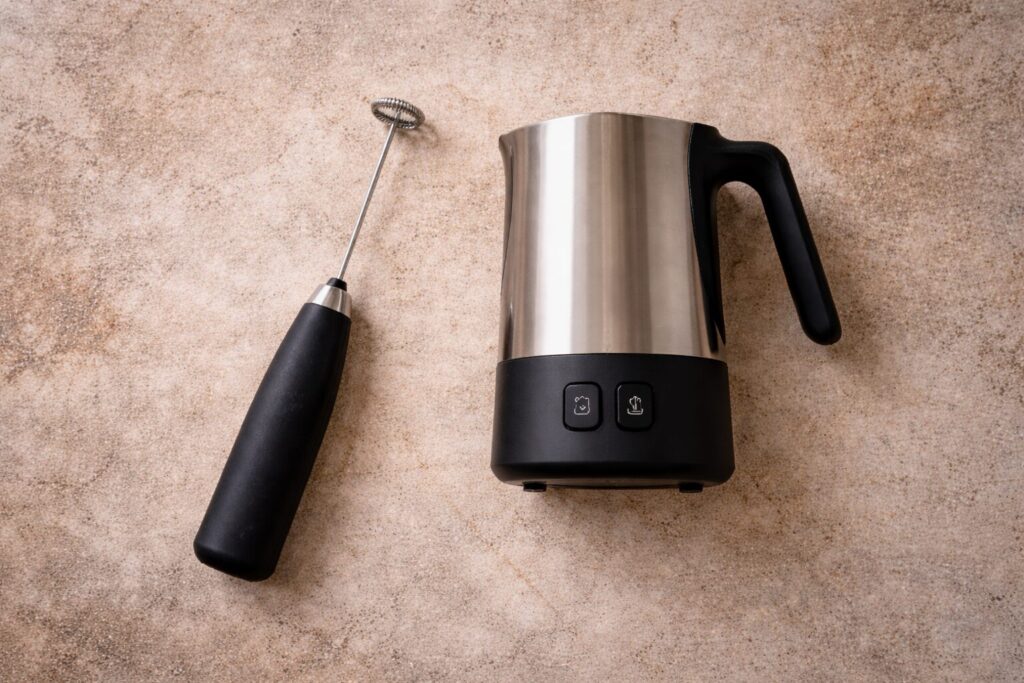
Handheld frother wand and electric milk frother on a linen surface

When the Frother Itself Is the Problem

If your milk is fresh, cold, and the right type but you're still getting poor foam, the issue is likely your equipment. Here's what to look for.

Problem 10

Your handheld wand is too slow

Cheap handheld frothers — typically anything under $8 with a single thin whisk coil — don't spin fast enough to incorporate air properly before the milk heats up and the foam window closes. This is especially pronounced with non-dairy milks. If you've been blaming the milk, try a faster wand before switching milks entirely.

Look for a handheld wand with 15,000+ RPM and a tight, multi-ring whisk coil. The Zulay Milk Boss is a reliable benchmark at under $15. See the best milk frothers guide for a full comparison.

Problem 11

Your electric frother runs too hot

Some electric frothers — particularly budget single-temperature models — heat milk above 160°F on their standard setting. That's fine for dairy but will reliably ruin oat and almond milk foam. If you're getting great results with whole milk but flat foam with plant-based milks on the same machine, this is almost certainly the cause.

Check your frother's max temperature in the spec sheet. For non-dairy milk, you need a model with a lower-temperature hot foam setting or an adjustable temperature dial. The Nespresso Aeroccino 4 and Instant MagicFroth both handle this well.

Problem 12

Your frother needs cleaning

Milk residue builds up inside frother jugs and on wand whisks faster than most people expect. A thin film of old milk on the whisk reduces friction, disrupts the vortex, and produces noticeably worse foam. If your results have gradually declined rather than suddenly changed, this is usually why.

For handheld wands: spin the whisk in a cup of warm soapy water after each use, then rinse. For electric frothers: rinse the jug immediately after use while the milk residue is still warm — once it dries, it's much harder to remove. Descale every few months if you have hard water.

Problem 13

Your wand position is wrong

With handheld wands, placement matters more than most people expect. Hold the whisk too deep and you just spin the milk without incorporating air. Hold it too shallow and you get large surface bubbles that collapse immediately. The sweet spot is just below the surface — you should see the milk creating a gentle vortex without the whisk breaking the surface.

Submerge the whisk about half an inch below the milk's surface and angle it slightly to one side to create a circular flow. Keep it there for 20–30 seconds, then tap the container and swirl before pouring.

If It's Time for a Better Frother

Heads up: Some links on this page are affiliate links. If you buy through them, I may earn a small commission at no extra cost to you. I only recommend products I'd actually use. — Nick

If you've worked through this list and the issue is genuinely your frother, here are two picks that solve the most common problems. For the full breakdown across every budget and milk type, see the best milk frothers for home use guide.

Best Handheld Fix · Under $15
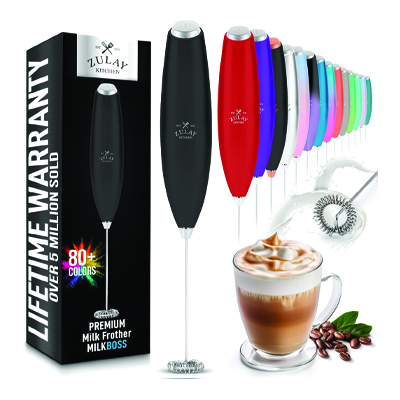
Zulay Kitchen Original Milk Boss Frother
Zulay Kitchen Milk Boss handheld frother
Solves: Slow motor, weak foam Milk: Dairy + non-dairy Temp Control: Manual

If your current wand is producing large, unstable bubbles, the Zulay Milk Boss is the most reliable budget fix. Its high-torque motor and 25-ring spiral whisk incorporate air fast enough to work well with oat and soy milk — something slower wands simply can't do. Runs on two AA batteries, no charging required.

Best for: Anyone whose cheap wand isn't cutting it and doesn't want to spend more than $15 to find out if a better frother is the answer.

Check Price on Amazon →
Best Electric Fix · $80+
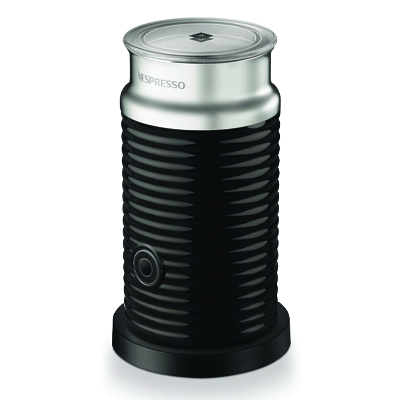
Nespresso Aeroccino 4
Nespresso Aeroccino 4 electric milk frother
Solves: Temperature control, consistency Milk: Dairy + non-dairy Temp Control: Automatic

If your electric frother is overheating milk or producing inconsistent results, the Aeroccino 4's four settings — hot dense foam, hot airy foam, cold dense foam, cold airy foam — remove the guesswork entirely. It's the top-tested electric frother across multiple independent reviews and handles oat and soy milk reliably at the right temperature.

Best for: Anyone frustrated by an inconsistent or single-temperature electric frother, especially if you're regularly working with non-dairy milks.

Check Price on Amazon →

Want the Full Frother Comparison?

We tested frothers at every price point and ranked them for dairy and non-dairy performance. See all our picks with full specs, pros and cons, and side-by-side comparisons.

See the Best Milk Frothers for Home Use →

Quick Wins for Better Foam Every Time

Once your milk and frother are sorted, these habits will consistently improve your results:

  • Tap and swirl after frothing. Tap the container firmly on the counter once or twice to pop large bubbles, then swirl gently to integrate. This is standard barista practice — it smooths the foam and makes it pour cleaner into a latte or flat white.
  • Pour immediately. Frothed milk starts to separate within a minute or two regardless of technique. Have your espresso or coffee ready before you froth, not after.
  • Use enough milk. Too little milk in the container means the whisk hits air before it can build a proper vortex. A minimum of 3–4 oz gives the whisk enough to work with.
  • Don't froth the same milk twice. Once milk has been frothed and cooled, re-frothing it produces flat, grainy results. The protein structure has already been used up. Always start fresh.
  • Match your foam style to the drink. Dense foam for cappuccinos, lighter silky foam for lattes and flat whites. The complete latte guide breaks down exactly what texture to aim for and how to get there.

Frequently Asked Questions

Foam that forms but collapses quickly is usually a fat or temperature issue. Skim or low-fat milk doesn't have enough fat to stabilize bubbles — switch to whole milk or a barista-blend non-dairy. Overheated milk has the same effect — the protein structure breaks down and the foam can't hold. Try frothing colder milk at a lower temperature and see if that fixes it.

Inconsistent oat milk results usually come down to temperature — either the milk was slightly warmer on bad days (left out longer, or frothed later in the morning when the fridge door has been opened more), or your frother runs slightly hotter on longer cycles. If you're using regular rather than barista-blend oat milk, that inconsistency is also built into the product itself. Barista-blend formulas are much more consistent batch to batch.

Yes — a bent or worn whisk coil on a handheld frother disrupts the vortex it needs to create to incorporate air properly. If your wand is more than a year old and used daily, the whisk may have taken enough wear to affect performance. Most handheld frothers have replaceable whisk heads. Check if yours does before buying a whole new frother — it's often a $5–8 fix.

Your coffee maker doesn't directly affect frothing, but a poorly calibrated coffee maker can produce coffee that's too weak or too hot — which can mask good foam or cause it to break down faster when combined. If you're troubleshooting your whole morning routine, the coffee maker troubleshooting guide covers the most common brew issues that affect the final drink.

Water hardness doesn't directly affect frothing milk, but it does affect your frother over time. Hard water causes mineral buildup inside electric frothers that can reduce heating efficiency and eventually cause inconsistent results. If you have hard water and an electric frother, descale every 1–2 months with a diluted white vinegar solution. This is also one of the most common causes of gradually worsening performance that gets misdiagnosed as a milk problem.

Some milks are genuinely harder to froth than others — rice milk and most flavored or sweetened non-dairy milks fall into this category. The added sugar and modified starches disrupt the foam structure significantly. If you've tried everything in this guide and still can't get usable foam, the milk itself is likely the limiting factor. For drinks where frothed milk matters — lattes, flat whites, cappuccinos — oat barista blend or whole dairy will serve you best.

☕ Quick Takeaway

  • Check milk firstOld, warm, or ultra-pasteurized milk is the #1 cause of frothing failures — before blaming the frother
  • Temperature mattersDairy: 140–155°F. Non-dairy: 130–150°F. Above that, foam structure breaks down
  • Non-dairy tipAlways use barista-blend oat or soy milk — regular formulas aren't made for frothing
  • Frother fixSlow wands and single-temperature electrics are the two most common equipment culprits
  • Technique tipFrother just below the surface, slight angle, 20–30 seconds — then tap and swirl before pouring
  • Don't re-frothOnce milk has been frothed and cooled, the protein structure is spent — always start fresh
Nick Puffer — Coffee Slang
Written by Nick Puffer

Former barista. Lifelong coffee obsessive. I started Coffee Slang to cut through the noise and share what actually matters — good recipes, honest gear takes, and a genuine love for the craft.

More About Nick →

Leave a Reply

Your email address will not be published. Required fields are marked *