Not necessarily. "Strong" usually describes flavor intensity, not caffeine content. Here's what actually drives caffeine levels:
You've probably grabbed a dark, thick cup of coffee expecting a serious caffeine kick — and then wondered why it barely moved the needle. Or heard someone say light roast has more caffeine than dark and immediately doubted it. Both experiences point to the same confusion: flavor strength and caffeine content are not the same thing.
This guide breaks down exactly what controls caffeine in your cup, why bold-tasting coffee can deceive you, and how to actually brew for more caffeine when you need it. No guesswork.
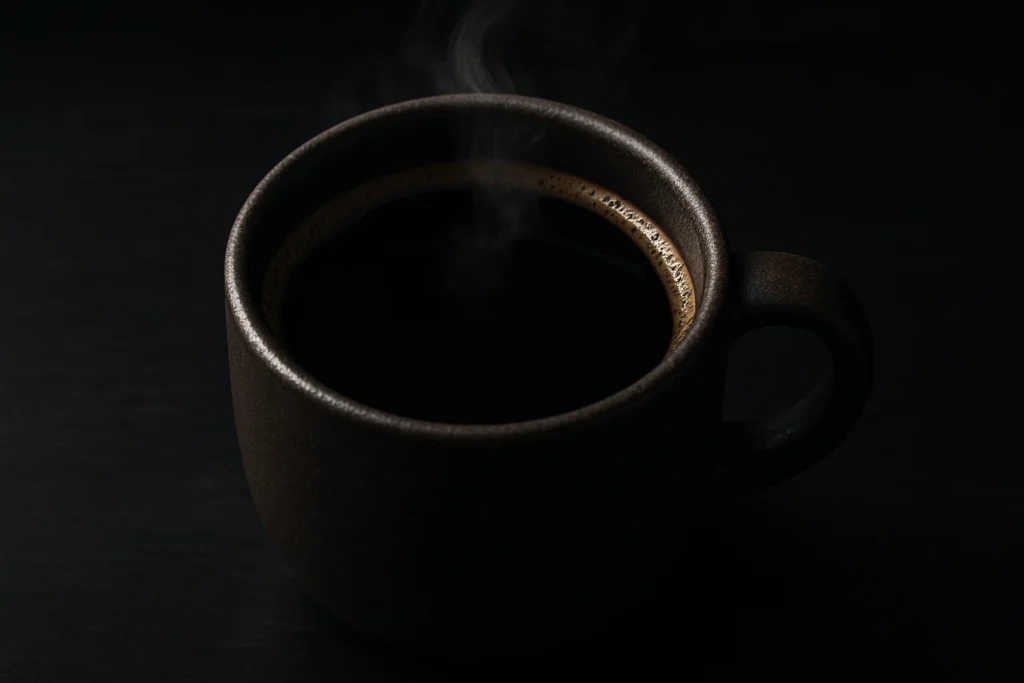
In everyday language, "strong coffee" means coffee that tastes bold, bitter, or intense. In the coffee world, that perception comes from a few different sources — none of which automatically translate to more caffeine.
The three main drivers of flavor intensity are:
None of these are reliable proxies for caffeine. A moka pot shot can taste like rocket fuel and still contain less caffeine than a 12 oz drip coffee, simply because of serving size and extraction differences.
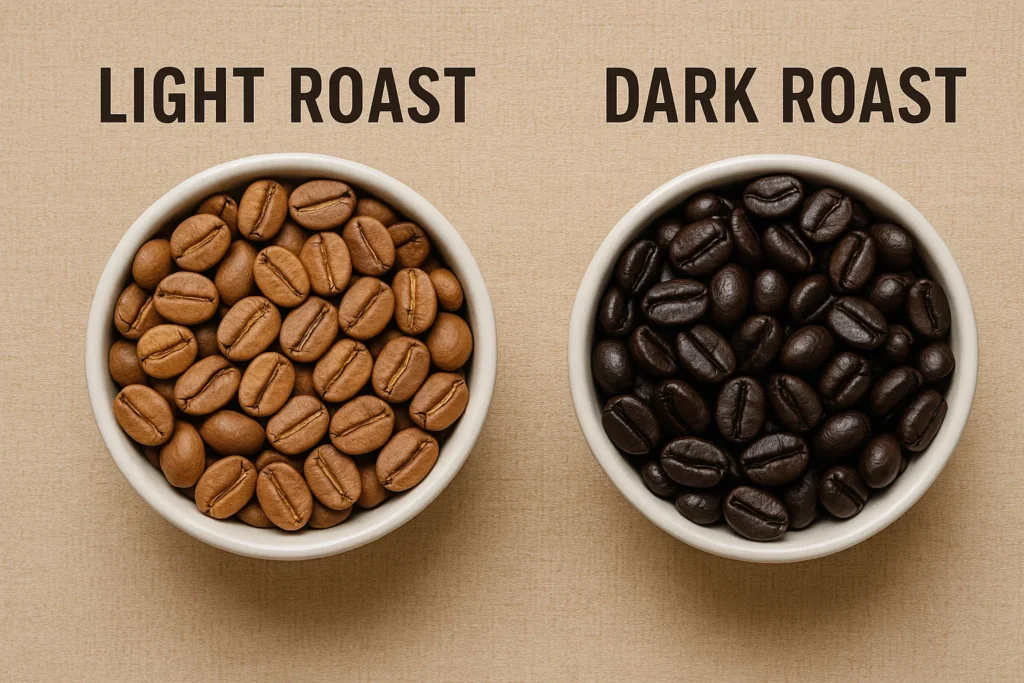
Yes — but probably not the way you think. The roasting process does burn off some caffeine, so light roasts retain slightly more caffeine by weight than dark roasts. The longer a bean is exposed to heat, the more caffeine is lost.
Here's where it gets complicated: dark roast beans expand during roasting, making them less dense. If you measure coffee by volume (scoops), a scoop of dark roast contains fewer beans by weight than a scoop of light roast — which can partially cancel out the caffeine difference. If you measure by weight (grams), light roast wins clearly.
Before roast, before method, before ratio — the type of bean you start with sets the caffeine ceiling for your cup. This is the most underappreciated factor in caffeine content.
There are two commercially dominant coffee species:
If you're brewing 100% Arabica and want more caffeine, switching to a blend with Robusta is one of the fastest ways to get there — without changing anything else about how you brew.
Brew method affects two things: how efficiently caffeine is extracted from the grounds, and how much total coffee ends up in your cup. Both matter. The table below compares common methods on a per-serving basis.
| Brew Method | Caffeine per Serving | Serving Size | Caffeine per oz |
|---|---|---|---|
| Cold Brew Concentrate | ~200–400 mg | 8 oz (diluted) | 25–50 mg/oz |
| Drip Coffee | ~95–165 mg | 8 oz | 12–20 mg/oz |
| French Press | ~80–135 mg | 8 oz | 10–17 mg/oz |
| Espresso | ~63–75 mg | 1 oz (single shot) | 63–75 mg/oz |
| Moka Pot | ~60–130 mg | 2–3 oz | 25–45 mg/oz |
| AeroPress | ~50–130 mg | 6–8 oz | 8–22 mg/oz |
| Pour Over | ~80–120 mg | 8 oz | 10–15 mg/oz |
Espresso has the highest caffeine concentration per ounce, but drip coffee typically delivers more total caffeine per serving because you drink more of it. Cold brew concentrate is the outlier — brewed at a 1:4 or 1:5 ratio, it can carry 2–4× the caffeine of a regular cup.
For more on maximizing caffeine at home, see How to Make Strong Coffee at Home.
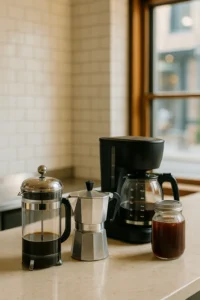
If you want a reliably higher-caffeine cup, there are four levers you can actually control. Pick the ones that fit your setup — you don't need to change everything at once.
Most home brewers use somewhere between 1:15 and 1:17 (one gram of coffee per 15–17 grams of water). Dropping to a 1:12 ratio doesn't just taste stronger — it genuinely delivers more caffeine per cup because you're using more grounds for the same volume of water.
Here's a quick practical reference:
| Ratio | Coffee (g) per 12 oz cup | Flavor profile | Caffeine impact |
|---|---|---|---|
| 1:17 (weak) | ~21g | Mild, thin | Baseline |
| 1:15 (standard) | ~24g | Balanced | +~15% |
| 1:13 (strong) | ~27g | Bold, full-bodied | +~30% |
| 1:10 (very strong) | ~34g | Intense, concentrated | +~60% |
A kitchen scale makes this precise and repeatable. If you're eyeballing scoops, you're just guessing — and your caffeine output will vary every cup.
Want to calculate your exact coffee-to-water ratio?
Once you know which ratio you're targeting, our free calculator does the math instantly — for pour over, French press, espresso, AeroPress, drip, and cold brew. Enter your coffee or water amount and get precise measurements in grams or ounces.
→ Open the Coffee Ratio CalculatorThese come up constantly, and they lead people to chase caffeine in the wrong direction.
Darker roasts taste more intense, but they've lost more caffeine during roasting. Light roast wins by weight. The difference is small — but if you're switching to dark expecting a caffeine boost, you may get the opposite.
Espresso is the most concentrated by ounce, but a single shot (~63–75 mg) has less total caffeine than an 8 oz drip coffee (~95–165 mg). If you drink a double shot, you're closer — but volume matters.
Bitterness comes from over-extraction, dark roast compounds, and robusta's naturally harsher flavor — not caffeine. Caffeine itself contributes only a small fraction of coffee's bitterness. A cup can taste very bitter with moderate caffeine, or taste smooth with high caffeine.
Strong-tasting coffee and high-caffeine coffee are related — but not the same. Flavor intensity comes from roast level, brew ratio, and method. Caffeine content is driven primarily by bean type, how much coffee you use, and how it's extracted. A bitter dark roast can taste intense while delivering the same or less caffeine than a well-extracted light roast drip.
If you want more caffeine in your cup, the most reliable moves are: increase your coffee-to-water ratio, choose a light or medium roast, consider an Arabica-Robusta blend, and use an immersion method like cold brew or French press that keeps grounds in contact with water longer. Get those variables right, and you'll know exactly what you're getting — instead of guessing based on how dark the cup looks.
Once you understand the actual levers, brewing for caffeine becomes straightforward. It's just coffee — measured, brewed, and adjusted on purpose.

Former barista. Lifelong coffee obsessive. I started Coffee Slang to cut through the noise and share what actually matters — good recipes, honest gear takes, and a genuine love for the craft.
Learn More