Café au Lait Recipe – New Orleans Style

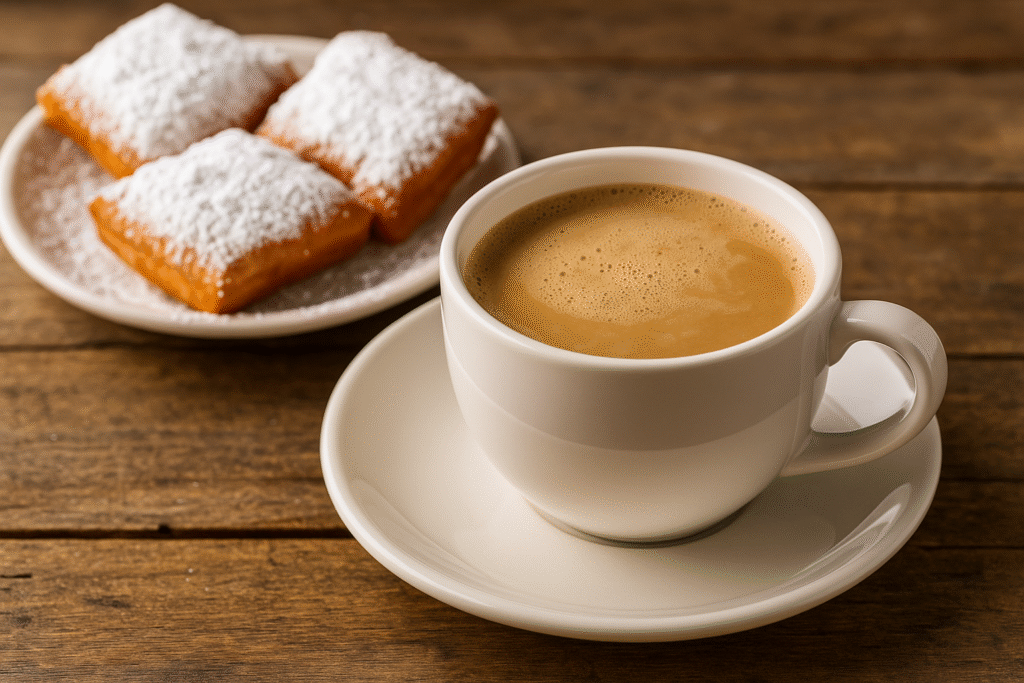
cafe au lait with beignets

There's something comforting about the simplicity of a warm cup of coffee with milk. The café au lait is one of those timeless drinks—rich, smooth, and easy to make at home with just a few basic ingredients. I live just outside of New Orleans, and every time I visit the city, grabbing a café au lait (usually with a side of beignets) is a non-negotiable part of the trip. There's something about that bold chicory flavor mixed with hot milk that just feels like home before heading into the French Quarter.

The name café au lait simply means "coffee with milk" in French, and the French-style recipe is a 50:50 blend of strong brewed coffee and hot milk. In New Orleans, this drink took on a distinctive twist: a very dark, robust roast mixed with roasted chicory root, combined half-and-half with steamed milk. The result is a light-brown, steaming hot drink (typically with little or no foam) that's closely tied to Crescent City coffee culture.

Where Café au Lait Comes From (and Why New Orleans Does It Differently)

Café au lait originated in 18th-century France as a morning coffee (often served in wide bowls) with equal parts hot milk. French settlers brought the concept to Louisiana, but New Orleans shortage conditions in the 1800s shaped its character. During the Napoleonic Wars, European blockades made coffee scarce, so residents began adding roasted chicory (the root of a wildflower) to stretch and flavor their brew. The practice really took hold during the American Civil War, when Union blockades cut off imports; New Orleanians by then preferred the fuller, nuttier taste of this "Creole coffee" blend. What began as wartime necessity became a beloved tradition: even today New Orleans institutions like Café du Monde and the French Market serve a 50/50 mix of dark-roast coffee with chicory and hot milk.

Coffee and Chicory Blend

For a true New Orleans–style café au lait, start with a dark-roast coffee (e.g. French or Italian roast). The blend is typically ~4 parts coffee to 1 part chicory by weight — roughly 80% coffee, 20% chicory. Chicory adds a toasty, slightly bitter note and thickens the mouthfeel. You can buy pre-mixed "coffee & chicory" blends from New Orleans brands, or mix your own: for example, 25 g coffee + 6 g chicory per batch.

Use fresh, filtered water and grind the coffee coarsely if using a French press, or medium for a drip filter. A bold brew strength is key — we recommend brewing at around a 1:12–1:15 ratio by weight so the coffee doesn't get too diluted by the milk. For example, 30 g dark roast (+ 7–8 g chicory) with ~360 g water yields ~350 g of brewed coffee — which you'll match with a similar weight of steamed milk.

Tips and Variations

  • Adjusting Strength: If the drink tastes weak once milk is added, brew your coffee stronger next time (more grounds or finer grind). Conversely, more milk will mellow a super-strong brew. A good starting point is roughly 1:1 by weight of coffee and milk in the final cup. See our full guide on how to make strong coffee at home for more detail.
  • Chicory Level: The classic ratio is ~4:1 coffee:chicory, but you can tweak it. More chicory gives a richer, slightly bitter flavor; less makes it closer to a plain French café au lait.
  • Milk Choice: Whole milk yields a creamy balance. Some home baristas prefer half-and-half for even creamier texture. Non-dairy milks like oat or soy can work — if you go that route, a barista-style oat milk will froth and blend the most like the real thing.
  • Brewing Method: Both drip and French press are traditional. If using an espresso machine, brew a strong lungo shot and dilute with warmed milk — though purists stick to drip or press.
  • No Foam: New Orleans café au lait isn't a foamy cappuccino or latte. Aim for a silky microfoam at most.
  • Variations: You can make an iced café au lait by brewing strong coffee and chilling it, then pouring over ice with cold milk — check out our cold brew guide for an even smoother iced version. Spices like cinnamon or nutmeg are popular additions; if you're into honey and spice in your coffee, the café miel is worth a try. For an adult twist, a splash of coffee liqueur or bourbon can be added (though that strays from the classic recipe).

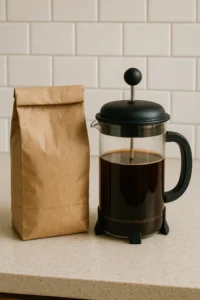
cafe au lait french pressFor a true New Orleans–style café au lait, start with a dark-roast coffee (e.g. French or Italian roast). The blend is typically ~4 parts coffee to 1 part chicory by weight – roughly 80% coffee, 20% chicory. Chicory adds a toasty, slightly bitter note and thickens the mouthfeel. (You can buy pre-mixed “coffee & chicory” blends from New Orleans brands or mix your own: for example, 25 g coffee + 6 g chicory per batch.) Use fresh, filtered water and grind the coffee coarsely if using a French press, or medium for a drip filter. A bold brew strength is key: we recommend brewing strong coffee (around a 1:12–1:15 ratio by weight) so that it doesn’t get too diluted by the milk. For example, 30 g dark roast (+ 7–8 g chicory) with ~360 g water yields ~350 g of brewed coffee – which you’ll match with a similar weight of steamed milk.

cafe au lait new orleans
Espresso Drinks Flat White Home Barista

Café au Lait Recipe

Strong, smooth, and velvety—the perfect balance between bold espresso and creamy milk.

Prep Time 5 Min
Cook Time 5 Min
Total Time 10 Min
Servings 1 serving

Ingredients

  • 20 - 30 grams of coffee/chicory blend
  • 4 - 6 oz whole milk (or barista-style oat milk)

Instructions

1

Measure & Grind

Weigh out your coffee and chicory. A helpful guide is ~20–30 g total coffee/chicory per 300–400 g water (adjust up for a stronger pot). Grind the blend coarsely for a French press or medium for drip.
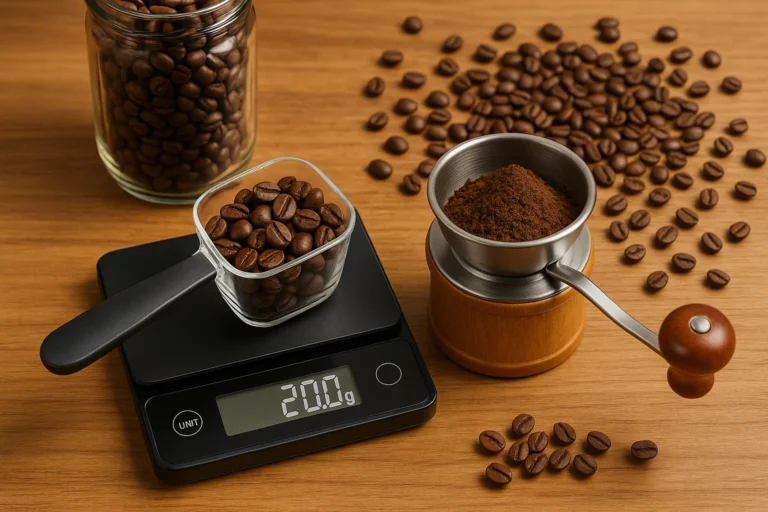
grinding coffee
2

Brew Coffee

Heat water to about 93–96 °C. Brew the coffee in your chosen method: French press, automatic drip, or pour-over. A French press (steep ~4 min) or good drip brewer is most traditional. (Moka pot works too, though that produces an even more concentrated base.) Aim for a strong extraction – the coffee should taste very bold before adding milk.

brewing coffee in v60
3

Steaming or Heating the Milk

Use whole milk (or half‐and‐half for extra richness). Heat the milk gently: you want it near scalding (around 65–70 °C) with microfoam, but not boiling. Traditionally, New Orleans cafes warm milk on low heat in a pitcher or pot (often on a hot plate) so it’s hot and slightly frothy but not airy. If you have a steam wand, create creamy milk with very fine bubbles. No steam wand? You can whisk hot milk vigorously or shake it in a jar and microwave briefly to get it warm and lightly foamy. Ultimately, the milk should be hot and velvety – too much foam is not needed, as NOLA café au lait is served with few bubbles.
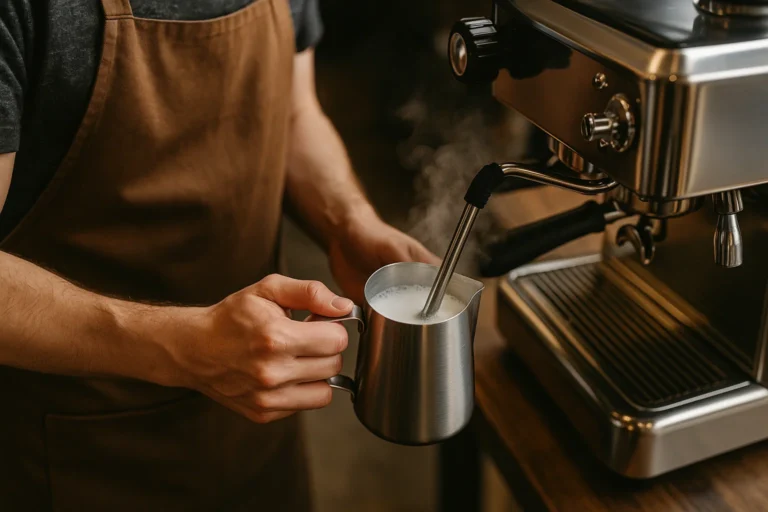
steam wand and steaming milk
4

Optional Sweetening

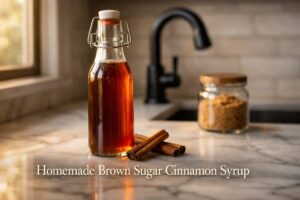
New Orleans café au lait is often served with sugar on the side (especially with beignets), but the drink itself is just coffee and milk. Add sugar or syrup only if desired.
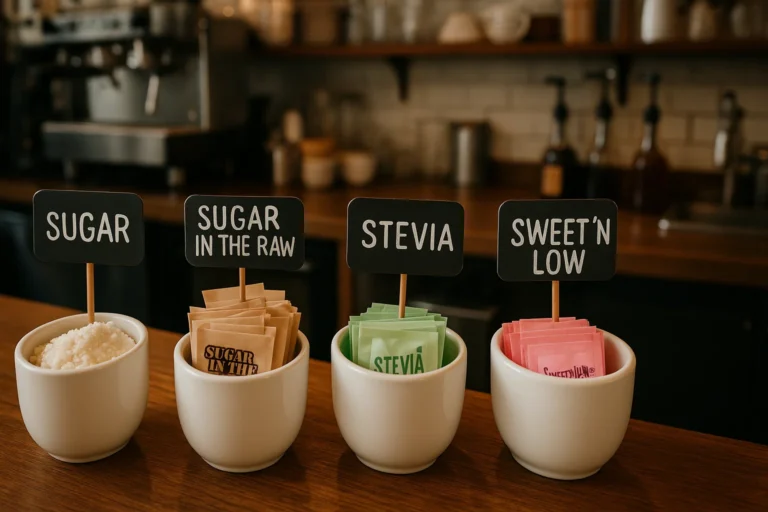
optional coffee sweeteners
5

Assembly and Serving

Pour the drink 50% coffee, 50% hot milk into a large mug or bowl. For example, if you brewed ~300 g coffee, add ~300 g steamed milk. Stir gently; the café au lait will be a uniform tan color with a few swirls but no thick crema or foam. (Unlike a latte, there’s no layered foam – it’s smooth and drinkable down to the last sip.) Serve immediately. The traditional accoutrement in New Orleans is a stack of powdered-sugar-dusted beignets – the perfect partner to the nutty, robust café au lait.


cafe au lait in hand

Frequently Asked Questions

What's the difference between café au lait and a latte?

+

The biggest difference is the base. A latte is built on espresso — typically one or two shots — combined with steamed milk and a thin layer of foam. A café au lait uses regular brewed coffee (drip, French press, or pour-over) mixed with hot milk in roughly equal parts. No espresso machine needed. The New Orleans version goes a step further by using a dark-roast coffee blended with chicory, giving it a nuttier, earthier flavor you won't find in a standard latte.

What is chicory coffee, and do I need it?

+

Chicory coffee is regular coffee blended with roasted chicory root — a plant that adds a toasty, slightly bitter, woody flavor and thickens the body of the brew. It's not required, but it's what makes a New Orleans–style café au lait taste distinctly different from plain coffee with milk. For the authentic experience, look for pre-blended bags from Café du Monde or Community Coffee, or mix your own at roughly 80% dark roast to 20% chicory by weight.

Can I make café au lait without an espresso machine?

+

Yes — and this is one of the best things about the drink. Café au lait was never meant to be made with espresso. A French press, drip brewer, or pour-over all work perfectly. The key is brewing strong so the coffee holds up once the milk is added. Check out our guide on how to make strong coffee at home for tips on dialing in your brew.

What brand of chicory coffee does Café du Monde use?

+

Café du Monde uses their own house blend — a pre-mixed dark roast coffee and chicory blend that's been their signature since 1862. You can buy it on Amazon or at most grocery stores in Louisiana. Community Coffee also makes a well-regarded chicory blend that's widely available nationwide. Both are solid starting points if you want to replicate the French Quarter flavor at home.

Is café au lait the same as white coffee?

+

No — completely different drinks. "White coffee" typically refers to either lightly roasted coffee beans (common in the Middle East and Southeast Asia) or simply coffee with added milk, depending on the region. Café au lait is always brewed coffee with hot milk in a 1:1 ratio, and the New Orleans version specifically uses a chicory-blended dark roast. The flavor profiles are very different.

Want More Coffee Recipes?

Tips and Variations

  • Adjusting Strength: If the drink tastes weak once milk is added, brew your coffee stronger next time (more grounds or finer grind). Conversely, more milk will mellow a super-strong brew. A good starting point is roughly 1:1 by weight of coffee and milk in the final cup.

  • Chicory Level: The classic ratio is ~4:1 coffee:chicory, but you can tweak it. More chicory gives a richer, slightly bitter flavor; less makes it closer to a plain French café au lait.

  • Milk Choice: Whole milk yields a creamy balance. Some home baristas prefer half‐and‐half for even creamier texture. Non-dairy milks (oat, soy) can work, but the flavor will differ from the classic taste.

  • Brewing Method: Both drip/percolator and French press are traditional. If using an espresso machine, simply brew a strong lungo shot and dilute with warmed milk (though purists stick to drip/press).

  • No Foam: New Orleans café au lait isn’t a foamy cappuccino or latte. Aim for a silky microfoam at most.

  • Variations: You can make an iced café au lait by brewing strong coffee and chilling it, then pouring over ice with cold milk. Spices like cinnamon or nutmeg stirred in the coffee or milk are also popular additions. For an adult twist, a splash of coffee liqueur or bourbon can be added (though that strays from the classic recipe).

SHARING IS CARING

☕ Quick Takeaway

  • What it isA 50/50 blend of strong chicory-laced coffee and hot steamed milk — New Orleans' signature morning drink
  • Coffee ratio~80% dark roast coffee, 20% chicory; brewed strong at 1:12–1:15 by weight
  • Milk ratioEqual parts brewed coffee and hot milk in the final cup
  • No espresso machine?French press or drip brewer works perfectly — this isn't an espresso drink
  • Calories~60–80 kcal with whole milk (unsweetened)
  • Ready in10 minutes
Nick Puffer — Coffee Slang
Written by Nick Puffer

Former barista. Lifelong coffee obsessive. I started Coffee Slang to cut through the noise and share what actually matters — good recipes, honest gear takes, and a genuine love for the craft.

More About Nick →

2 Responses

  1. My Grandmother had a beautiful exact way of making her own coffee au lait, every bit like the Morning Call in New Orleans. Also made by my dear Aunt Fenilia. She was a close second behind my Grandmother August. Nan was a terrific cook, she taught me how to cook. My ; Grandmother learned to cook at a very young age, she was the eldest of her siblings. Family brought her into the kitchen very young, a little girl; showed her everything a kitchen had. When she met my Grandfather, he’s Italian, thru & thru, she had to learn all over again & cook his food. As far as I am concerned she was tops in my book. Grandma was add liber, as she went along with getting a very tasty meal together. she had no recipe, Nan had recipes, & that is how I learned to cook from my aunt. Grandmas favored words were you cant hurry up a meal, you have to have patience, a lot, & love making a meal; shes right.

Leave a Reply

Your email address will not be published. Required fields are marked *