This is the recipe I didn’t want to write.
Back when I worked at Starbucks, summer showed up like a sticky wave of chaos. Every shift turned into a blur of blender noise and grande caramel frappuccinos—extra whip, extra drizzle, and pump counts so specific you’d swear they were scientific. If you’ve never scrubbed syrup out of a blender thirty times in one shift while wearing a black apron stained with regret, it’s hard to explain. Frappuccinos weren’t coffee. They were sugar delivery systems with a caffeine afterthought.
Most baristas I knew didn’t drink them. We drank espresso. Black coffee. Drinks built on balance and restraint—the same thinking behind understanding how lattes are built and why they matter in the first place. I swore I’d never make a blended drink again once I left the bar. I even told myself they didn’t really count as coffee.
But here we are.
Enough people asked for a blended iced coffee recipe that didn’t separate into a sad, icy mess that I finally caved. I rolled my eyes, pulled up a few old references, and started testing. The early attempts were exactly what I expected—too sweet, watered down, and broken five minutes after blending. Then I stopped treating it like a dessert and started treating it like coffee. I adjusted the ratios. Added structure. A tiny stabilizer. And suddenly it worked.
Creamy. Balanced. It held together longer than it had any right to.
And I hated how much I liked it.
What Makes This Recipe Actually Work
Let’s get one thing straight: without a stabilizer, most homemade frappés fall apart. Literally. You get foam on top, watery coffee on the bottom, and a sad, icy slush stuck in the middle. That separation isn’t a blender issue—it’s a structure problem.
The fix is small but important. A tiny amount of xanthan gum—the same stabilizer used in café-style base mixes—keeps the ice, coffee, and milk locked together. If you don’t have that on hand, a spoonful of instant pudding mix does a similar job by adding body without turning the drink into dessert soup. Either way, you’re giving the coffee something to hold onto.
This recipe also leans hard on double-strength coffee, because weak brews disappear once ice enters the chat. If you’ve ever wondered why blended drinks taste hollow, it usually comes down to not brewing strong enough in the first place—something I break down more fully in how to make strong coffee at home. Strength matters here.
A pinch of salt tightens the flavor, and paying attention to your ratios helps avoid the watered-down finish that ruins most frozen coffee drinks. If ratios feel fuzzy, the logic behind them is the same as any good brew—explained cleanly in what is the best ratio for making coffee.
Finally, blender order matters more than people think. Liquids first, ice last. It keeps the blades moving and avoids the ice-jam shuffle that turns your blender into a sad, screaming brick.
Why Strong Brew Is Non-Negotiable
Once you add ice and milk, weak coffee disappears like it was never there. You end up with a drink that’s bland, watery, and forgettable. This isn’t the place for your standard morning drip. Blended iced coffee needs a backbone—something that still punches through when the ice hits and the milk softens everything else.
That means brewing stronger than usual. Not burnt. Not bitter. Just bold and concentrated. Use a French press with a higher ratio, a moka pot for that espresso-like intensity, or go with an AeroPress—which is one of the best ways to get café-level flavor without the big machine. If you’re looking for a quick, no-fuss option, our AeroPress iced method nails it.
Another smart move? Freeze your strong coffee into cubes and use them as your ice. That way, as your drink chills, it doesn’t dilute—it doubles down.
This whole drink lives or dies by the base. You can blend it beautifully, get the texture perfect—but if your coffee is weak, it won’t matter. So start strong. Always.
Barista Tips for a Better Frappe
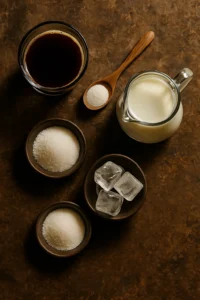 You don’t need a commercial setup to get this right. But a few small tweaks can take your frappe from “pretty good” to “whoa, where’d you buy this?”
Start cold
Hot coffee melts the ice too fast and ruins the texture. Brew strong, cool it fast, or make it ahead and stash it in the fridge. Even better? Brew it the night before.
Use coffee ice cubes
Freeze leftover coffee into ice cube trays and use those instead of regular ice. They chill your drink without watering it down—and that’s huge when you’ve only got a half cup of brew to work with.
Blend fast and short
Don’t let the blender run forever—it’ll heat the drink and break it down. 20 to 30 seconds at high speed is plenty. If it clogs, pulse or stir, but don’t overwork it.
Don’t skip the salt
It sounds weird, but a tiny pinch of salt (like ¹⁄₁₆ tsp) balances sweetness and cuts bitterness. It’s a trick baristas use in cold brews and sweet drinks to sharpen the flavor.
Use the stabilizer. Always.
A frappé without xanthan gum or pudding mix is a ticking time bomb. It’ll separate before you’re halfway through. One pinch is all it takes to keep everything creamy and together.
Did You Try It? Tell Us What Your Thoughts Are
Alright—your blender’s either going to earn its keep here, or it’s going to remind you why you avoided frozen coffee drinks in the first place. If you made this, I want the honest report: did it stay smooth, or did it start splitting on you five minutes later?
Drop a comment and tell me how it went—what milk you used, if you went xanthan or pudding mix, and whether you kept it classic or went full mocha/caramel. And if you tweaked anything that made it better, share it. Someone else is one hot blender lid away from giving up.
Want More Coffee Recipes?