
Home » Coffee Knowledge » coffee-recipes » iced coffee recipes » How to Make Cold Brew Coffee at Home: My 1:8 Ratio, 16-Hour Recipe
 Nick Puffer
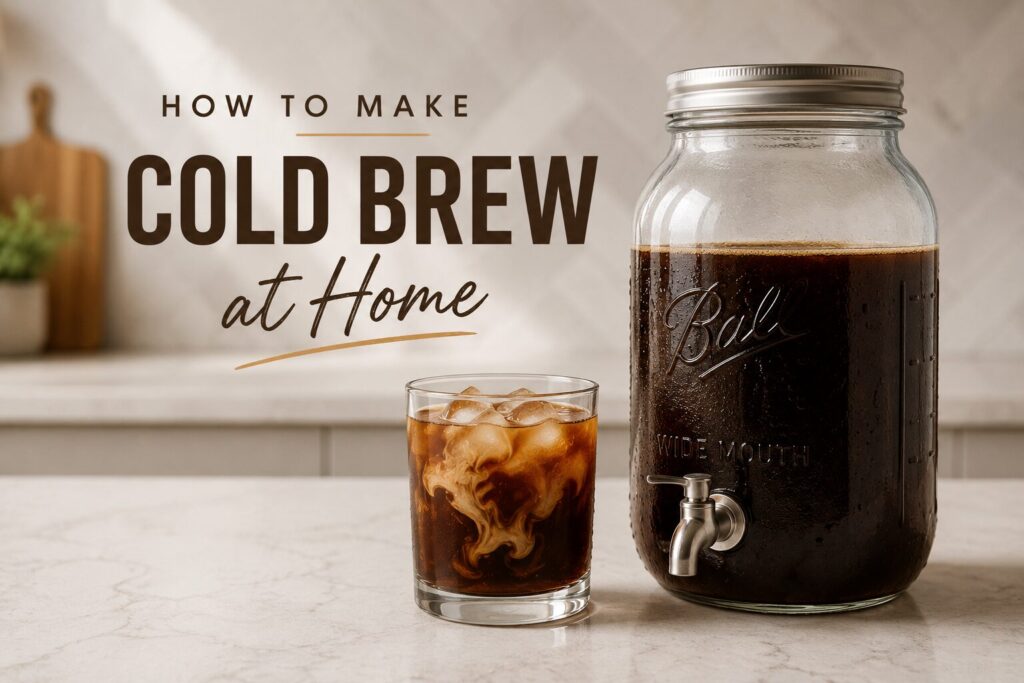
Cold brew is coffee steeped in cold water for 12–18 hours, then strained. The slow, low-temperature extraction pulls sugars and chocolate notes without the bitterness you get from heat.
I had a bag of Brazil medium roast from Bright Eyed Coffee that was a few weeks past roast date — past peak for espresso, but right in the pocket for cold brew. Stale-ish beans are the perfect excuse to brew a batch, because cold extraction is forgiving in a way hot brewing is not.
This is the cold brew recipe I keep coming back to. One ratio, one grind setting, one steep time, and a jar in the fridge that lasts me a week of iced coffees.
If you're new to the method, the rest of this post walks through what cold brew actually is, how it tastes versus other iced coffee styles, and exactly how I brew mine.
Cold brew is coarsely ground coffee steeped in cold or room-temperature water for 12 to 24 hours, then filtered. No heat at any point. The result is a smooth, low-acid concentrate that you cut with water or milk before drinking.
The defining feature is time. Hot water extracts in four minutes because heat is doing the work. Cold water needs hours to pull the same soluble material out of the grounds. That long, low extraction skips a lot of the bitter compounds heat would otherwise drag along.
Two things people get wrong: cold brew is not iced coffee, and it is not automatically stronger or weaker than hot coffee. It is its own brew method with its own flavor profile, which I'll get into below.
The earliest documented version is Kyoto-style slow drip, which Dutch traders brought to Japan in the 1600s. They needed coffee that could survive long sea voyages, so they figured out how to brew it without fire. The Japanese refined the method into a tower drip system — one drop of cold water at a time, over several hours.
The modern jar-and-fridge version owes a lot more to American specialty roasters in the 2000s and early 2010s. Bottled cold brew from Stumptown and Grady's hit grocery shelves around 2011, and by 2015 every coffee shop in the country had a cold brew tap. The home version followed naturally — it's the easiest "barista-style" drink you can make at home, because the equipment is whatever container you already own.
Cold brew is smooth, low in perceived acidity, and weighted toward the heavier, sweeter end of the flavor wheel: chocolate, caramel, nuts, dried fruit. The bright citrus and floral notes you'd get from the same beans hot-brewed will mostly disappear, because those aromatics need heat to volatilize.
That's why Brazil works so well as a single-origin cold brew bean. Brazil naturals are already chocolatey, nutty, and low-acid in a hot brew — cold extraction just amplifies what's already there. If you cold-brew a bright Ethiopian, you'll get a clean cup, but you'll also strip out a lot of what made you buy that bag in the first place.
Texture-wise, cold brew is rounder than iced coffee and noticeably thicker than Japanese iced. People sometimes describe it as syrupy. That's the long steep talking.
These three get mixed up constantly, often on the same menu. They're different drinks with different processes — there are actually three easy ways to make iced coffee at home, and only one of them is cold brew. Here's the short version:
| Method | Water Temp | Brew Time | Best For |
|---|---|---|---|
| Cold Brew | Cold / room temp | 12–24 hours | Smooth, low-acid batch coffee for the fridge |
| Iced Coffee | Hot, then chilled | 4–6 minutes brew + chill | Standard drip coffee, poured over ice later |
| Japanese Iced | Hot, brewed over ice | 3–4 minutes | Bright, aromatic single-origins served cold |
If you want the full breakdown, I wrote a longer piece on the real difference between iced coffee and cold brew. Short answer for choosing: cold brew if you want a week's worth in the fridge, Japanese iced if you want one perfect cup right now, or AeroPress iced coffee if you want a single cup in three minutes flat.
Cold brew has fewer dials than espresso. Get these three right and the rest is patience.
Coarse grind keeps the brew from over-extracting during the long steep. Think raw sugar or kosher salt, not table salt. Too fine and the cold brew turns muddy and astringent; too coarse and it ends up watery even after 16 hours.
I use a Fellow Ode Gen 2 on setting 9. The Ode runs from 1 to 11, with pour-over typically sitting around 4–6, so 9 is solidly in cold brew territory. If you have a different grinder, aim for something that looks like coarse sea salt.
For 250 grams of coffee, I use 2,000 grams of filtered water — a 1:8 ratio by weight. That makes a strong concentrate. To serve, I dilute roughly 1:1 with water or milk over ice, which puts the cup at around 1:16 — the same target as a hot batch brew.
If you want ready-to-drink cold brew straight from the jar, brew at 1:15 or 1:17 instead. You'll trade flexibility for less dilution math at serving time. For my money, concentrate is the better default — it stores longer, takes up less fridge space, and lets you adjust strength cup by cup.
Working with a different jar size? Drop your coffee weight into my coffee ratio calculator and it'll spit out the water weight at 1:8 (or any ratio you want). Beats doing the math at 6 a.m.
The useful range is 12 to 24 hours. Under 12 and the extraction is incomplete — you'll get sour, thin coffee. Past 24 and you start pulling in the bitter compounds you were trying to avoid in the first place.
Sixteen hours is my default because it lines up neatly with overnight: start it at dinner, strain it after breakfast. The middle of the brew window is also where Brazil and other chocolatey beans show the most balance — long enough to hit full sweetness, short enough to keep the coffee from going flat.
This is the exact recipe in the video. One jar, no special equipment, and a 16-hour wait. Scale the weights up or down at the same 1:8 ratio if your jar is a different size — the ratio calculator does it for you.
If you don't have a jar this size, you can do the same thing in a French press — I wrote a separate guide on the French press cold brew method that walks through the small differences.
Once the base recipe is dialed in, the variations are mostly about what you add at serving time, not changes to the brew itself.
Drop a split vanilla bean or a cinnamon stick into the jar before steeping. The 16-hour soak infuses gently without overpowering the coffee. Use one bean or stick per 2 liters — more than that and the spice runs the show.
A drizzle of caramel and a pinch of flaky salt turns a glass of concentrate-plus-milk into a coffeeshop drink. Recipe for that one over at the salted caramel cold brew post.
Sounds wrong, tastes right. Cold brew concentrate cut with lemonade is the cleaner version of a Mazagran — bright, refreshing, and surprisingly not bitter because the cold extraction kept the harsh notes out. Full method on the cold brew lemonade post.
Cold brew concentrate topped with a spiced pumpkin cold foam is the fall-coded version of this drink. The base recipe doesn't change — you just float a couple of ounces of homemade pumpkin cream cold foam on top. Full method on the iced pumpkin cream cold brew recipe.
If you want a sweeter, creamier cup, oat milk with a splash of vanilla syrup over cold brew concentrate is hard to beat — basically a creamy sweet iced coffee with better coffee underneath. Skip the ice melt by freezing some of the concentrate into cubes and using those instead of regular ice.
Cold brew is forgiving, but when something goes wrong the cause is almost always one of these four.
Tastes bitter. Either you steeped too long, ground too fine, or both. Pull the time back to 14 hours and bump the grinder one notch coarser.
Tastes weak or sour. Steep wasn't long enough, or the grind was too coarse. Add 2–4 hours next batch, or step the grinder one notch finer. If you need a quick stronger cup while the next batch steeps, here's how to make strong coffee at home without restarting cold brew from scratch.
Cloudy or gritty. Fines made it through the strain. Always double-strain — mesh first, then paper filter or nut milk bag.
Flat or stale tasting. Beans were too old (we're talking months, not weeks) or the batch sat in the fridge past day 10. Cold brew is forgiving, not immortal. Don't try to stretch it further by re-steeping the spent grounds either — I cover when that does and doesn't work in can you reuse coffee grounds.
Cold brew is the lowest-effort, highest-yield batch coffee you can make at home. One jar, one ratio, one overnight, and you've got a week of iced coffees ready to go. It's also the most forgiving way to use beans that aren't quite fresh enough for pour-over or espresso anymore — which is exactly why I'm making this batch.
The recipe I keep coming back to is 250 grams of Brazil medium roast from Bright Eyed Coffee, 2,000 grams of filtered water, 16 hours on the counter, double-strained. Diluted 1:1 with milk over ice, it tastes like a chocolatey iced latte you didn't have to wait in line for.
If you've got a bag of beans that's been sitting on the counter staring at you, this is what to do with it.
Cold brew concentrate is the base for a lot of other drinks on this site. It’s what makes the blended iced coffee recipe hold together instead of separating, and it’s the coffee I use in coffee lemonade when I want something sharp in summer. One more thing people ask: cold brew is one of the few coffees that’s fine to warm back up — see is it OK to reheat coffee for why hot-brewed coffee doesn’t take it as well.

Former barista. Lifelong coffee obsessive. I started Coffee Slang to cut through the noise and share what actually matters — good recipes, honest gear takes, and a genuine love for the craft.
About Nick →