
Home » Coffee Knowledge » home-brewing » How Many Scoops of Coffee per Cup? The Simple Ratio That Works
 Nick Puffer
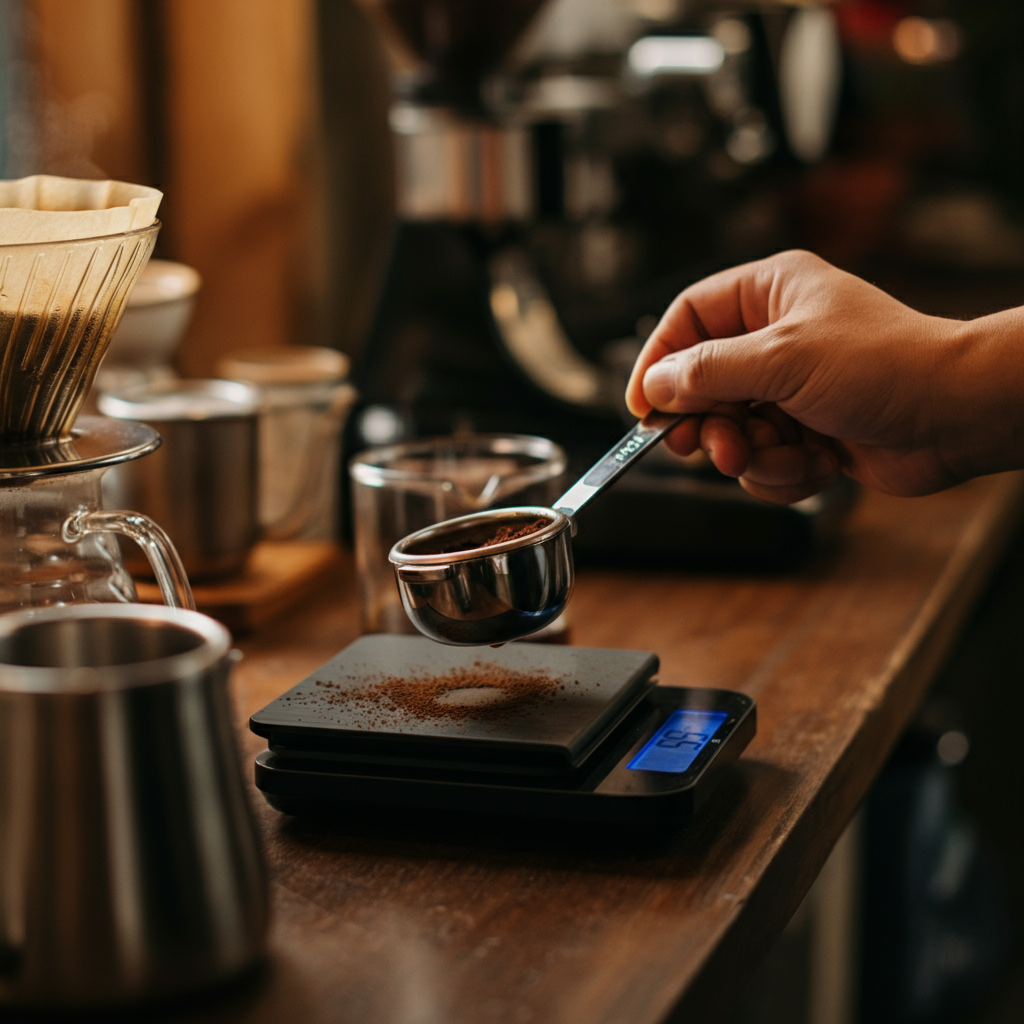
Use 1 level scoop (2 tablespoons, or about 10 grams) of ground coffee for every 6 ounces of water. That's the standard ratio most baristas and the Specialty Coffee Association recommend as a starting point.
That's the short answer. Below you'll find a full ratio chart for every cup size, the adjustments for each brew method, and how to scale for multi-cup batches.
This chart assumes 1 standard coffee scoop = 2 tablespoons = ~10 grams of ground coffee. A “cup” in coffee terms is 6 ounces, not 8.
| Water Volume | Scoops | Tablespoons | Grams | Typical Use |
|---|---|---|---|---|
| 6 oz (1 cup) | 1 | 2 tbsp | 10 g | Single cup |
| 8 oz | 1.3 | 2.5 tbsp | 13 g | Standard mug |
| 12 oz | 2 | 4 tbsp | 20 g | Large mug |
| 16 oz | 2.7 | 5 tbsp | 27 g | Travel tumbler |
| 20 oz | 3.3 | 6.5 tbsp | 33 g | XL tumbler |
| 24 oz | 4 | 8 tbsp | 40 g | Shared pot |
| 48 oz (8 cups) | 8 | 16 tbsp (1 cup) | 80 g | Full carafe |
☕ Tip: Your “12-cup” coffee maker doesn't mean twelve 8 oz mugs. Coffee makers measure cups as 6 oz. A 12-cup machine holds 72 oz of water and needs 12 scoops (24 tablespoons).
One of the most common questions is how to scale scoops for a multi-cup batch. Here's the math done for you:
| Pot Size | Water (oz) | Scoops | Grams |
|---|---|---|---|
| 4 cups | 24 oz | 4 | 40 g |
| 6 cups | 36 oz | 6 | 60 g |
| 8 cups | 48 oz | 8 | 80 g |
| 10 cups | 60 oz | 10 | 100 g |
| 12 cups | 72 oz | 12 | 120 g |
These numbers work for drip coffee makers. If your coffee tastes weak at these ratios, check that you're using level scoops — not heaping — and that your grind size matches your brewer. A too-coarse grind under-extracts and produces thin, sour coffee regardless of how much you use.
This trips up almost everyone. In everyday life, a cup is 8 ounces. In coffee brewing, a cup is 6 ounces. The coffee industry standardised on 6 oz decades ago, and every coffee maker on the market uses this measurement for its carafe markings.
This means your 16 oz travel mug holds almost 3 “coffee cups” — not 2. If you've been using 2 scoops for a 16 oz mug and wondering why it tastes watery, that's why. You need closer to 2.7 scoops.
A standard coffee scoop holds 2 level tablespoons, which is roughly 10 grams. If you don't own a coffee scoop, a regular tablespoon from your kitchen drawer works fine — just use two per 6 oz cup.
That said, scoops and spoons aren't perfectly consistent. How tightly the grounds are packed, how fine the grind is, and whether the scoop is truly level all affect the actual amount. Two “scoops” of finely ground coffee weigh more than two scoops of coarsely ground coffee.
If you want true consistency, a simple kitchen scale is the best upgrade you can make. Weigh 10 grams per 6 oz of water and you'll get the same cup every single time, regardless of grind size or bean density. The Specialty Coffee Association recommends a ratio of 1:15 to 1:18 by weight (grams of coffee to grams of water).
☕ Quick conversion: 1 gram of water = 1 mL. So 6 oz of water = 177 mL = 177 grams. At a 1:16 ratio, that's about 11 grams of coffee — very close to 1 level scoop.
One scoop per 6 oz is a solid baseline, but different brewing methods extract coffee differently. Here's how to tweak the ratio for each one:
Stick with the standard: 1 scoop (2 tbsp / 10 g) per 6 oz. Drip machines are designed around this ratio. If your coffee tastes thin, try a slightly finer grind before adding more coffee — under-extraction from too-coarse a grind is the most common culprit.
Pour-over is more hands-on, so you have more control. Start with a 1:16 ratio by weight (about 1 scoop per 6 oz) and adjust based on your pour speed and grind size. Chemex filters are thicker and absorb more oils, so you may want a slightly finer grind or a touch more coffee. For a deep-dive, check out The Ultimate Guide to Pour-Over Coffee.
Use a coarse grind and aim for a 1:15 ratio (slightly more coffee than drip). For a standard 34 oz French press, that's about 5–6 scoops (50–60 grams). The longer steep time and metal filter produce a heavier body, so the stronger ratio works well here. See our full French Press Guide for the complete technique.
Cold brew uses a much higher coffee-to-water ratio because cold water extracts more slowly. Use a 1:4 to 1:8 ratio depending on whether you're making concentrate or ready-to-drink. For concentrate, that's roughly 1 cup of coarsely ground coffee per 4 cups of water. Steep 12–24 hours, then dilute to taste.
Espresso is measured in grams, not scoops. A standard double shot uses 18–20 grams of finely ground coffee to produce about 36 grams of liquid espresso. A scoop is too imprecise for espresso — invest in a scale if you're pulling shots at home.
Start with 1 scoop (the AeroPress comes with its own scoop, which holds about 14 grams — slightly more than a standard coffee scoop). Use 6–8 oz of water depending on how strong you like it. The inverted method with a fine grind and 1–2 minute steep produces the most espresso-like results.
You can have the right number of scoops and still get bad coffee. These are the mistakes I saw constantly behind the bar:
Heaping scoops instead of level. A heaping scoop can hold 50% more coffee than a level one. If you're inconsistent, your coffee will taste different every day. Level your scoop with a finger or the back of a knife.
Confusing your mug size with a “cup.” Your 16 oz mug is not 2 cups — it's almost 3. Use the chart above to match your actual mug or tumbler.
Ignoring grind size. The ratio only works if the grind matches the brewer. Too coarse for drip = sour and thin. Too fine for French press = bitter and muddy. Match grind to method first, then dial in the amount.
Using stale or pre-ground coffee. Even the perfect ratio can't save beans that were ground weeks ago. Buy whole beans and grind right before brewing if you can. The flavour difference is dramatic.
Bad water. Coffee is 98% water. If your tap water tastes off, your coffee will too. Use filtered water and heat it to 195–205°F (90–96°C).
Need more details on finding the perfect balance? Check out What Is the Best Ratio for Making Coffee for an in-depth guide to coffee-to-water proportions.
It's the best starting point for most people and most brew methods. From there, adjust based on your taste, your bean, and your brewer. If you like stronger coffee, add half a scoop more. If you find it too intense, drop to 1.5 tablespoons instead of 2.
12 scoops (24 tablespoons, or about 120 grams). Remember that a “12-cup” coffee maker means 72 ounces, not 96. The machine's “cup” is 6 oz.
6 scoops (12 tablespoons / 60 grams) for a 6-cup (36 oz) batch.
Not necessarily. Dark roast beans are less dense (they've lost more moisture during roasting), so a scoop of dark roast actually weighs slightly less than a scoop of light roast. If you're measuring by scoops, use the same number. If you're weighing, use the same grams. The flavour will be different, but the amount doesn't change.
2 tablespoons per 6 oz cup. For an 8 oz cup, use about 2.5 tablespoons.
A scoop is perfectly fine for everyday brewing. A scale is better if you want lab-level consistency or you're brewing pour-over and espresso where small differences matter. For most drip coffee drinkers, a level scoop is all you need.
A standard coffee scoop holds 2 tablespoons (about 10 grams). It's just a shortcut so you can measure one scoop instead of two separate tablespoons.
Start with 1 level scoop (2 tablespoons / 10 grams) per 6 ounces of water. Use the charts above to scale for your mug size or pot size. Match your grind to your brew method, use decent water, and taste your coffee with attention.
Once you find the ratio that fits your palate and your setup, write it down somewhere. Consistency is the difference between sometimes making good coffee and always making good coffee. ☕

Former barista. Lifelong coffee obsessive. I started Coffee Slang to cut through the noise and share what actually matters — good recipes, honest gear takes, and a genuine love for the craft.
More About Nick →