
Home » Coffee Knowledge » Product Review » milk frothers » Milk Frother Cleaning Guide
 Nick Puffer
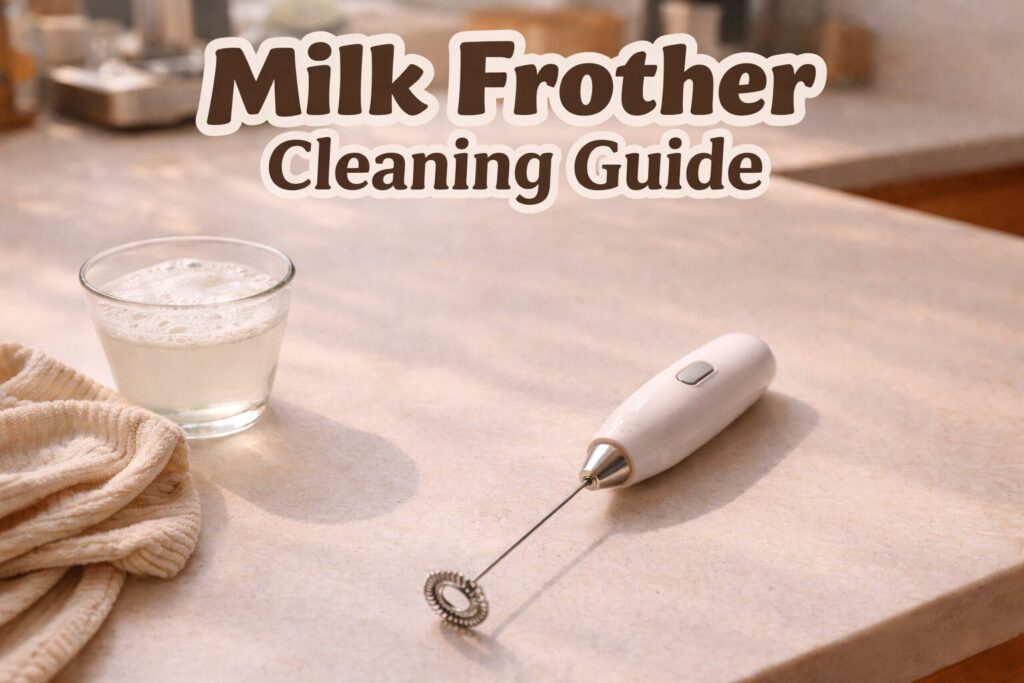
Clean your milk frother after every use — rinse it immediately while milk residue is still liquid. For handheld wands, spin the whisk in warm soapy water and wipe dry. For automatic jugs, rinse the interior, wipe the coil, and deep-clean weekly with white vinegar or a descaling solution. It takes 30 seconds daily and keeps your frother producing great foam indefinitely. Not sure which frother you have? See our complete milk frother guide or the handheld vs electric breakdown.
Milk is one of the fastest-fouling substances in your kitchen. Leave milk residue in your frother for even a few hours and it dries into a stubborn film that dulls foam quality, traps bacteria, and eventually burns onto heating elements. The good news: cleaning a milk frother properly takes almost no time if you do it right after use — and this guide covers exactly how to do it for every frother type. If you're still deciding between types, the handheld vs electric frother guide lays out the tradeoffs clearly.
Most frother problems — weak foam, off-tasting milk, heating inconsistencies — trace back to buildup. Here's what happens when you skip cleaning:
The fix is simple: rinse immediately, wipe thoroughly, and deep-clean weekly. Five minutes a week keeps your frother performing like new for years.
Handheld wands are the easiest to clean — the motor body never contacts milk, so you only need to clean the whisk end. If you don't have a wand at all, check out how to froth milk without a frother — four no-equipment methods that work.
Hold the whisk end under warm running water while running the frother for 5–10 seconds. This flushes out most of the milk before it can dry.
Fill a small glass or cup with an inch of warm water and a drop of dish soap. Submerge the whisk end and run the frother for 10–15 seconds. This breaks up any residual fat or protein buildup around the coil.
Run the whisk under clean water one more time, then either air-dry or wipe with a clean cloth. Never submerge the motor body — keep water below the battery compartment.
The battery compartment and motor are not waterproof. Hold the frother with the whisk pointing down and only immerse from the whisk end. Water in the motor body will kill the unit.
If milk has dried on the coil, soak just the whisk end in warm water for 5 minutes to loosen it, then run the frother in soapy water as above. A soft toothbrush works well for scrubbing the coil without bending the wire.
Automatic jugs (like the Nespresso Aeroccino 3, Breville Milk Café, Instant Pot, and Secura) need more attention because they heat milk directly — that means scale buildup on the coil is a real concern over time. This is especially true if you're regularly frothing oat milk, which scorches more readily than dairy.
As soon as you've poured your frothed milk, add a small splash of warm water to the jug and swirl it around. Pour it out. This takes 10 seconds and prevents most residue from hardening.
Use a damp cloth or sponge to wipe the inside of the jug and around the whisk attachment. Most automatic frothers have a non-stick coated interior — avoid abrasive pads that scratch the coating.
The magnetic whisk lifts out on most models. Rinse it under warm water and set it aside to dry. If there's residue in the groove on the bottom of the jug where the magnet sits, wipe it clean with a damp cotton swab.
The heating element and electrical components are in the base. Only the jug interior is safe for water contact. Do not immerse the entire unit or run it through the dishwasher unless the manual explicitly states it's safe.
Add equal parts water and white vinegar to the fill line (roughly ½ cup each). Run the frother through a normal heating cycle without the whisk attached.
Let the vinegar solution sit in the warm jug for 5 minutes after the cycle completes. This dissolves mineral scale from the heating coil. Pour it out, then run one or two plain water cycles to clear the vinegar taste.
Wipe the interior dry with a clean cloth and leave the jug inverted to air-dry completely before the next use.
If you're in an area with hard tap water, descale monthly instead of weekly. A dedicated descaling solution (like Dezcal) works faster than vinegar and leaves no taste residue — worth it if your frother sees daily use.
Manual pump frothers like the Bodum Latteo are among the easiest to clean — most are fully dishwasher safe. The carafe, plunger screen, and lid all separate for thorough cleaning.
Remove the lid and pull out the plunger. The mesh screen at the bottom of the plunger is where milk residue concentrates — rinse it under warm water right away.
Most glass manual frothers are fully dishwasher safe. For hand washing, use warm soapy water and a bottle brush for the carafe. Pay attention to the mesh screen — a soft toothbrush cleans between the fine mesh wires effectively.
Moisture trapped between the mesh layers can encourage mildew. Lay the plunger flat and allow all parts to dry completely before putting it back together.
| Cleaning Agent | Handheld | Automatic Jug | Manual Plunger | Notes |
|---|---|---|---|---|
| Warm water rinse | ✓ Safe | ✓ Safe | ✓ Safe | Best first-line daily clean |
| Mild dish soap | ✓ Safe | ✓ Safe | ✓ Safe | Use sparingly; rinse thoroughly |
| White vinegar solution | ✓ Safe | ✓ Safe | ✓ Safe | Excellent for descaling; always rinse after |
| Dishwasher | ✗ No | ✗ No | ✓ Usually | Check model manual; most automatics are hand-wash only |
| Abrasive scrubbers / steel wool | ✗ No | ✗ No | ✗ No | Scratches non-stick coating and metal coils |
| Bleach or harsh chemicals | ✗ No | ✗ No | ✗ No | Corrodes coils; leaves harmful residue |
| Dedicated descaler (e.g. Dezcal) | Not needed | ✓ Safe | Not needed | Best for hard water scale on heating coils |
The interior has a non-stick coating — the most important thing is to never use abrasive sponges. Rinse immediately after use, wipe with a soft cloth, and remove the magnetic whisk for separate rinsing. The coil on the bottom of the jug is where scale accumulates: a monthly vinegar cycle keeps it clear. Never submerge in water. Full specs and testing notes in the milk frother guide.
The Breville has a removable jug that's safe to hand wash, but the induction disc base must stay dry. Wipe the base with a damp cloth only. The temperature sensor on the inside wall can accumulate residue — a cotton swab gets into that corner effectively. The induction coil is especially sensitive to scale buildup given the precision heating, so monthly descaling is worth it.
Similar non-stick interior to the Aeroccino. The lid has a small vent — rinse it out regularly as milk can get trapped in the seal. The whisk attachment is magnetic and lifts out easily. Do not put in the dishwasher.
Stainless steel interior is more durable than non-stick coated models and can handle slightly firmer scrubbing (soft sponge only). Still hand-wash only. The larger capacity means more interior surface area — a bottle brush is helpful for thorough cleaning.
Fully dishwasher safe. The mesh plunger screen is the only area that needs attention — run it under hot water immediately after use and check that the mesh isn't clogged. Disassemble completely before dishwashing to prevent residue from being trapped in the assembly.
Never submerge the motor body. For daily cleaning, running the whisk in warm water is sufficient. The coil spring of the whisk can trap dried milk — a pipe cleaner or thin bottle brush reaches between the coils if buildup accumulates. Replace the whisk head if it starts to corrode. Not sure a handheld is right for your setup? Read how to make good coffee at home with milk for the bigger picture.
Fill the frother with equal parts water and white vinegar, run a cycle, and let it sit for 10 minutes before rinsing. Repeat if necessary. Persistent smell usually means residue has built up in a seam or behind the whisk magnet mount — inspect those areas carefully.
Degraded foam is often a cleaning problem, not a mechanical one. Scale on the heating coil changes the thermal profile and affects how milk proteins denature. Run a full descaling cycle and test again. If the whisk coil on a handheld has bent slightly or accumulated residue in the spring, that also reduces foam quality significantly. If cleaning doesn't help, it may be worth reading the handheld vs electric comparison to see if an upgrade makes sense.
Burned milk residue on the heating coil means the frother wasn't cleaned promptly and scale has built up. Soak the jug interior with undiluted white vinegar for 20–30 minutes, then run a full vinegar descaling cycle. If the burn is on the coil itself, let the vinegar solution sit directly on it.
Brown discoloration on a stainless or non-stick interior is typically mineral scale or a protein/fat film. A vinegar cycle handles both. If the non-stick coating appears to be flaking or peeling (not just discolored), replace the frother — a compromised coating can't be safely restored.
Rinse after every single use — this takes under 30 seconds and prevents 90% of buildup problems. Do a proper wipe-down clean daily if you use it daily. Run a vinegar descaling cycle once a week if you're in a hard water area, or every 2–3 weeks otherwise.
Most automatic electric frothers are hand-wash only — the heating element and electronics in the base are not dishwasher safe. Manual plunger frothers (like the Bodum Latteo) are typically fully dishwasher safe. Handheld wands should never go in the dishwasher. Always check your specific model's manual.
Soak the affected area in warm water for 5–10 minutes to rehydrate the dried milk, then wipe or rinse clean. For stubborn spots on automatic jug interiors, a damp cloth with a small amount of dish soap works well. Avoid anything abrasive — soft cloths or sponges only.
Yes — diluted white vinegar (50/50 with water) is safe for all frother types. For automatics, run a cycle with the solution and rinse thoroughly afterward. For handhelds, briefly spin the whisk in the vinegar solution. For manual plungers, hand wash with diluted vinegar. Always follow with a plain water rinse to remove any vinegar taste.
A persistent smell usually means there's residue somewhere you haven't reached — common spots are the magnet mount on the bottom of the jug, the vent in the lid, or behind the whisk attachment coil. Disassemble as fully as your model allows and soak all removable parts in warm soapy water. Running a full vinegar cycle in the jug typically eliminates any remaining odor.
Directly, yes. Scale on the heating coil changes how quickly milk reaches temperature, which affects protein denaturation and foam stability. Residue on the whisk impairs air incorporation. Many people notice an immediate improvement in foam quality after a thorough descaling cycle — especially if the frother has been in regular use for several months without one. For more on what great foam actually makes possible, see the complete latte guide.
The single most effective maintenance habit: rinse immediately after every use. Everything else — weekly descaling, occasional deep cleaning — matters, but it matters much less if you're rinsing promptly. A warm-water rinse before milk dries takes 15 seconds and eliminates most problems before they start.
If you're not sure which type of frother you have or are thinking about upgrading, our complete milk frother guide covers all the top models with honest testing notes. Want to compare types side by side? The handheld vs electric breakdown cuts straight to the decision. And if you're making do without a frother at all, the no-frother frothing guide has four methods that actually work.
Once your frother is clean and dialled in, the drinks open up — from a properly textured latte to a dense cappuccino to a silky flat white. No espresso machine? No problem — these methods pair just as well with a frother.
A clean frother is a happy frother. ☕

Former barista. Lifelong coffee obsessive. I started Coffee Slang to cut through the noise and share what actually matters — good recipes, honest gear takes, and a genuine love for the craft.
More About Nick →