What Is Blooming Coffee? (And How to Do It in 30 Seconds)

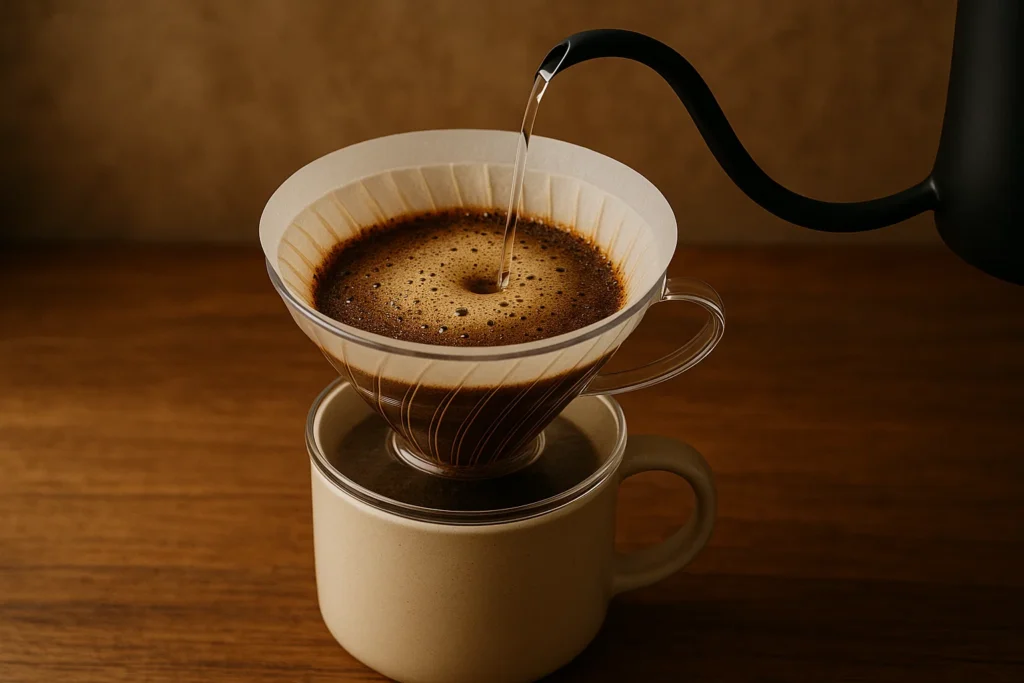
hario v60 being bloomed

☕ Quick Answer

Blooming coffee is a 30–45 second pre-brew step where you pour just enough hot water to wet the grounds, then wait. It lets trapped carbon dioxide escape from fresh coffee so the water that follows can actually extract flavor instead of fighting gas.

  • What it is: A short pause at the start of a brew while CO₂ escapes the grounds.
  • How long: 30–45 seconds (longer for very fresh beans, shorter for older ones).
  • Water amount: Roughly 2× the weight of the coffee — e.g. 40 g water for 20 g coffee.
  • Best for: Pour-over, drip, AeroPress, French press, Moka pot.
  • Skip it? Only cold brew — cold water doesn't trigger the same CO₂ release.
  • What it fixes: Flat, sour, or under-extracted cups from fresh coffee.

If you've ever poured water onto fresh coffee grounds and watched them puff up like a soufflé, you've already seen the bloom. It's the most overlooked 30 seconds in home brewing, and skipping it is the most common reason a fresh bag of beans tastes worse than it should.

This guide covers what blooming coffee actually means, what's happening chemically, why it changes the cup, and exactly how to do it across every brew method that benefits from it.


What Blooming Coffee Means

Blooming coffee means pouring a small amount of hot water onto fresh coffee grounds before the rest of the brew, then waiting 30–45 seconds before continuing. That pause lets carbon dioxide trapped inside the beans escape into the air, so the water you pour next can saturate the grounds evenly instead of getting pushed away by gas.

You'll know it's working because the grounds will visibly swell and bubble. Some people call this "the bloom" because the bed of coffee literally puffs up like a flower opening. Others call it pre-infusion, especially in espresso machines that build the bloom into the program automatically. Same thing, different name.

The technique is most associated with manual pour-over (think Hario V60 or Chemex), but every brew method that uses hot water and freshly roasted beans benefits from it. The only common exception is cold brew, which uses cold water and a very coarse grind — neither of which triggers a meaningful CO₂ release.


What's Happening Inside the Grounds

Roasting coffee creates carbon dioxide as a byproduct of the chemical reactions inside the bean. That CO₂ gets trapped in the bean's cellular structure and slowly leaks out over the weeks that follow roasting. Freshly roasted coffee — anything within about 14 days of roast, especially from a single-origin roaster — contains a lot of it. Older coffee, much less.

When hot water hits fresh grounds, the heat accelerates the gas release dramatically. CO₂ rushes out of the grounds and forms bubbles and foam on top of the coffee bed. Until that gas finishes escaping, the water can't get into the pores of the grounds where the actual flavor compounds live. The grounds are essentially holding their breath underwater.

The bloom step lets the gas escape first, on its own time, in a controlled 30–45 second window. Once the CO₂ has cleared, the rest of your pour can do its job: extract sugars, acids, and aromatics from the bean and end up in your cup instead of staying locked inside.

Freshness checkThe size and vigor of the bloom is the simplest freshness test you have. A big, slow-collapsing dome means the beans are within a couple weeks of roast date. Almost no visible bloom means the bag is old — the coffee will still brew, but it won't taste like much.

Why Blooming Matters for Flavor

Skip the bloom and the trapped CO₂ does two things to your cup, both bad. First, it physically blocks water from contacting all the coffee evenly, so some grounds over-extract and others stay barely touched — that's under-extraction, and it tastes thin and sour. Second, CO₂ itself is slightly acidic when it dissolves in water, so a no-bloom cup picks up a sharp, vegetal acidity that the rest of the coffee's flavor can't balance out.

Cups brewed without a bloom consistently get described as flat, thin, or sour. The same beans, same grind, same dose, same water — just adding a 30-second bloom — usually come out rounder, sweeter, and noticeably more complex. It's the single highest-return technique change you can make to a manual brew, and it costs you 30 seconds and zero dollars.

James Hoffmann, former World Barista Champion, has tested this enough times to call it settled science even while he's running his own experiments on the edges of it. His standing advice: don't skip the bloom, but don't time it with a stopwatch either — watch the coffee bed and pour again once the foaming has slowed to a trickle.


Bloom by Brew Method

Blooming looks slightly different across brew methods, mostly because the gear changes how the water and grounds interact. Here's what the bloom should look like and how long to wait for each common method:

Method Should you bloom? Bloom Water Wait Time
Pour-Over (V60, Chemex) Yes — essential 2× coffee weight 30–45 seconds
Drip Coffee Maker Yes, if the machine supports it ~2× coffee weight 30 seconds (some machines do this automatically)
French Press Yes 2× coffee weight 30–45 seconds, then add the rest
AeroPress Yes 2× coffee weight 30 seconds, then top up and plunge
Moka Pot Sort of — happens passively as water heats N/A N/A — no manual bloom step
Cold Brew No — cold water doesn't release CO₂ N/A N/A — skip it

The pour-over numbers are the gold standard because pour-over is the method where the bloom is most visible and most impactful. If you're brewing with a manual pour-over setup, the bloom is non-negotiable. The other methods benefit too, just less dramatically.

How to Bloom Coffee — Step by Step

The technique is the same across brew methods. The only thing that changes is what container the grounds are in and what you do once the bloom finishes.

  1. Weigh your coffee and water. A 1:16 brew ratio is standard for pour-over and drip — so 20 g of coffee gets 320 g of water total. You'll use about 40 g of that water for the bloom (2× the coffee weight). The coffee ratio calculator will scale these for any dose.
  2. Heat the water to 195–205°F (90–96°C). Just off the boil. If you don't have a temperature kettle, boil the water and wait about 30 seconds before pouring. More on brewing temperature.
  3. Grind your coffee. Medium-coarse for pour-over, coarse for French press, fine for AeroPress. A consistent grind is what makes the bloom work evenly — a decent burr grinder matters more here than the kettle does.
  4. Pour the bloom water. Start a timer and pour in a slow spiral from the center outward, just enough to saturate every ground. The total bloom pour should weigh about 2× the coffee dose.
  5. Wait 30–45 seconds. You'll see the grounds puff up, bubble, and slowly settle. Don't pour again until the foaming has clearly slowed.
  6. Optional: gentle swirl or stir. A small swirl breaks the dry crust at the top and helps gas escape. Don't agitate hard — you'll create channels in the bed.
  7. Continue the brew. Pour the remaining water in slow concentric circles for pour-over, or top up and plunge for AeroPress, or fill and steep for French press.
💡
Watch the coffee, not the clockJames Hoffmann's standing advice: time isn't the goal, the visual is. When the foaming has slowed to almost nothing and the bed has started to flatten, the bloom is done. That's usually 30–45 seconds, sometimes 20 if the beans are older, sometimes 60 if they're fresh from the roaster.

Common Bloom Mistakes

Most bloom problems are one of these four. Each has an obvious fix once you spot it.

Pouring too much water for the bloom. The point is to saturate the grounds, not start the actual brew. If half your total water is gone before the bloom ends, you've over-poured. Stick to 2× the coffee weight.

Skipping the bloom on fresh beans. Coffee within two weeks of its roast date contains the most CO₂. Skipping the bloom here is the single biggest cause of sour, flat pour-overs. If you just opened a fresh bag, the bloom matters more, not less.

Waiting too long. A 90-second bloom isn't double the benefit — it's a cold brew now. The hot water you poured has lost too much heat to extract properly when you resume. 45 seconds is the practical ceiling for most beans.

Pouring hard during the bloom. A blast of water from a stovetop kettle pushes grounds aside and creates channels. Use a gooseneck kettle if you can, or pour from a slow, low angle if you can't. Gentle and steady wins.

⚠️
Stale beans won't bloom muchIf your grounds barely react when the water hits — no foam, no swelling — the beans are past their useful life. The brew will still happen, but the result will taste muted no matter what you do with the bloom timing.

Adjusting Bloom Time and Water Ratio

The 30–45 second / 2× water guideline is a starting point, not a rule. A few situations call for tweaking.

Very fresh beans (within 7 days of roast)

Fresh beans can foam for a full minute. If the bloom is still actively bubbling at 45 seconds, give it another 15. You're not extracting yet — you're just waiting for the gas to clear. Some brewers bump the bloom water to 2.5× the coffee weight for fresh beans to keep the grounds from drying out during the longer wait.

Older beans (3+ weeks past roast)

Older coffee has less CO₂ to release, so the bloom is smaller and shorter. 20–25 seconds is usually plenty. Don't force a longer wait — the gas is already gone, and you're just letting the water cool.

Decaf or dark roasts

Both tend to bloom hard. Decaf has gone through extra processing that affects gas retention, and dark roasts have spent more time in the roaster losing structural integrity. Watch the foam — when it slows, move on.

Bigger or smaller doses

The 2× water-to-coffee rule scales linearly. A 40 g dose blooms with 80 g of water, a 12 g dose blooms with 24 g. The ratio calculator handles the math if you're brewing a non-standard amount.


FAQ

What does it mean to bloom coffee?
Blooming coffee means pouring a small amount of hot water (about 2× the coffee weight) onto fresh grounds and waiting 30–45 seconds before continuing the brew. The pause lets trapped CO₂ escape from the beans so the rest of the water can extract flavor evenly.
What does blooming coffee do?
It releases carbon dioxide that was trapped in the beans during roasting. CO₂ blocks water from contacting the grounds evenly and adds a sour edge when it dissolves in the brew water. Letting it escape first leads to fuller, sweeter, less acidic coffee.
How long should coffee bloom?
30–45 seconds for most beans. Very fresh beans (within 7 days of roast) can bloom for up to 60 seconds. Older beans (3+ weeks past roast) often finish blooming in 20–25 seconds. Watch the foam — when it slows, the bloom is done.
Do you have to bloom coffee?
For pour-over and other manual hot brewing methods with fresh beans, yes — skipping it is the most common reason a good bag of coffee tastes flat or sour. Cold brew is the one method where blooming doesn't apply, because cold water doesn't release the same CO₂.
How much water do you use for a coffee bloom?
Roughly twice the weight of the coffee — a 2:1 water-to-coffee ratio. For 20 g of coffee, that's 40 g of water for the bloom. The rest of your total brew water gets poured after the bloom finishes.
Can stale coffee bloom?
A little, but not much. Beans more than a few weeks past roast have already lost most of their CO₂ to the atmosphere, so there's not much left to release when water hits. The lack of bloom is itself a reliable freshness test for a bag.
Do you need to bloom for a French press?
Yes — same principle. Add the grounds to the press, pour bloom water (2× the coffee weight), wait 30–45 seconds, then pour the rest and steep as usual. Full walkthrough on the French press method. Skipping the bloom in a French press tends to leave you with a thinner, more astringent cup.
What if my coffee doesn't bloom at all?
Two possibilities: the beans are stale (past their useful life), or your water is too cool to trigger the CO₂ release. Check the roast date on the bag and make sure your water is between 195–205°F when it hits the grounds.

The Bottom Line

Blooming coffee is the cheapest, simplest upgrade you can make to a hot brew. Thirty seconds of patience, no gear required, and the cup that comes out is noticeably better — rounder, sweeter, less likely to read as flat or sour. The grounds tell you when they're ready by puffing up and then settling back down.

If you're already weighing your coffee and water, you're doing the hard part. Adding a 30-second bloom is the next step, and it's the one that finally makes fresh beans taste like fresh beans.

Pour the water, watch the bloom, wait for it to settle. That's the whole technique.

☕ Quick Takeaway

  • What it isA 30–45 second pre-brew step that lets CO₂ escape fresh coffee grounds.
  • Water ratio~2× the coffee weight (40 g water for 20 g coffee).
  • Wait time30–45 seconds — longer for fresh beans, shorter for older.
  • Best forPour-over, drip, French press, AeroPress, Moka pot.
  • Skip it?Only on cold brew.
  • CostZero — no extra gear, no extra coffee, 30 seconds of patience.
Nick Puffer — Coffee Slang
Written by Nick Puffer

Former barista. Lifelong coffee obsessive. I started Coffee Slang to cut through the noise and share what actually matters — good recipes, honest gear takes, and a genuine love for the craft.

About Nick →

Leave a Reply

Your email address will not be published. Required fields are marked *